

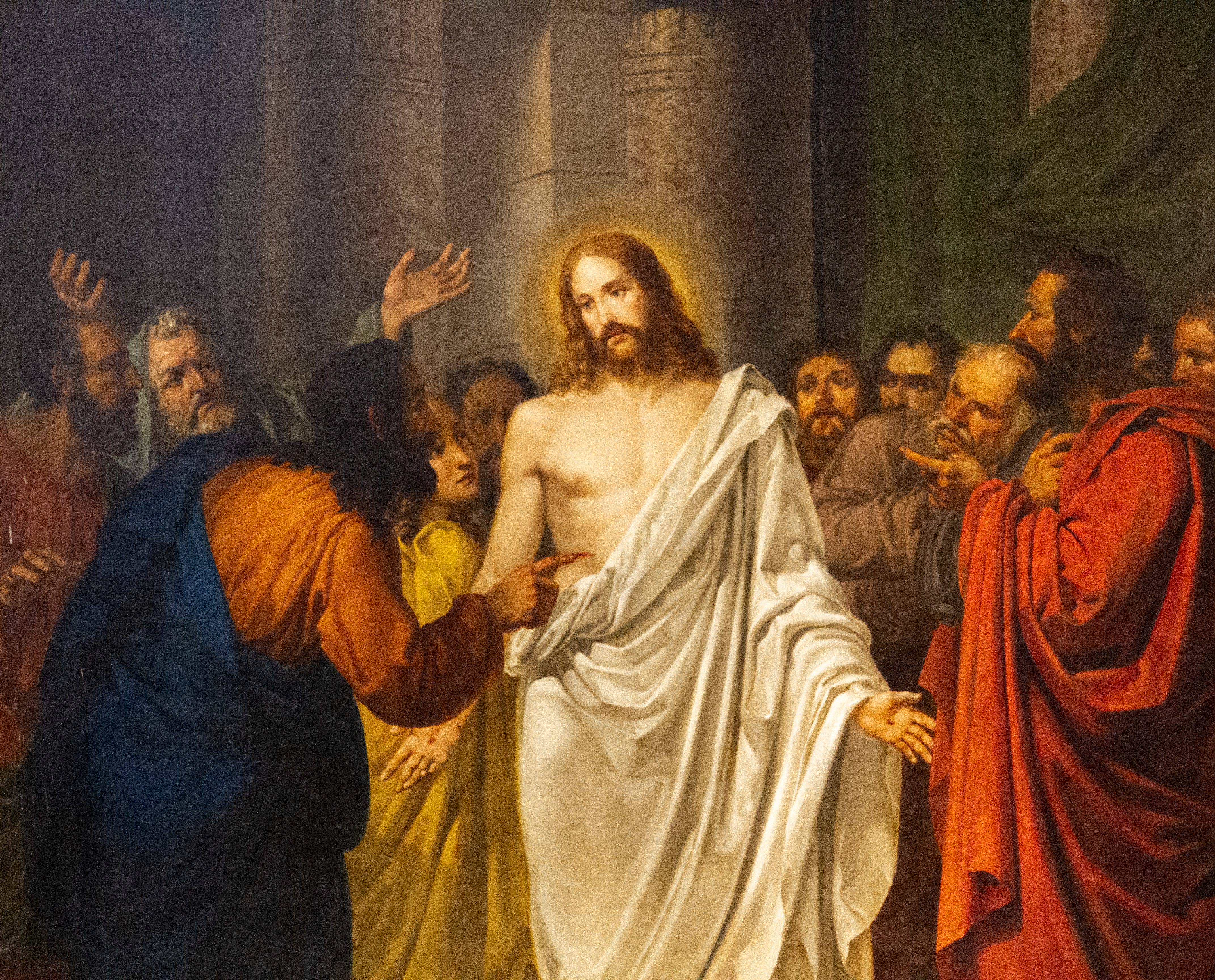
We are continuing our series on Christ’s life in terms of a theology of who Christ is. We are not looking at the Gospels per se, but what we are looking at is the person of Christ and I want to talk about just that tonight as well as what the atonement of Christ means. What did He accomplish on the cross? We want to think about the implications of that because it has incredible bearing for us. It is not just something for our minds; it is really something for our hearts.
In the last article, we looked at the twin doctrines of the deity and the humanity of Jesus Christ and we stressed that both are significant. It was absolutely essential that Christ be fully man if His sacrifice is to be genuine and real and if He is to have a solidarity with the human condition. He had to become one of us; not someone who was a look-alike, but rather He had to be fully human. In that understanding, then, it was necessary as well for Him, as a man, to shed His blood; and that is something, again, that required not a look-alike, but a real person; One who also could be a high priest and intercede on our behalf and who understands the experience of the human condition.
At the same time I want to stress the absolutely essential dimension of the divinity of Christ. If He is not fully God as well then we, too, have a problem because what He did on the cross would not have been sufficient to pay for all the sins of the world. If we think about the reality of sin, and we alluded to this in the last article, sin is anything that is inconsistent or contrary to the character of God. Viewed that way, of course, all of us fall short in thoughts, words, and deeds. He took upon Himself and embraced and paid for the combined sins of all the world; all who ever were and all whoever will be. This is wonderful image, then, of the divine and human and how they are both utterly necessary for the atonement to be complete.
Having said that, then, there is a deep and profound mystery in all of this. “…it was the Father’s good pleasure for all the fullness to dwell in Him,” as we see in Colossians 1:19. In Colossians 2:9 we also read, “For in Him all the fullness of the Deity dwells in bodily form.” So, He indeed is the Emmanuel, the God with us.
Now, the question of the intelligibility of this doctrine is something that has a good deal to do with your view of authority. If you embrace a closed universe, one in which there can be no interaction from without; if you embrace a universe which is not open to divine intrusion such as miracles and the incarnation, then you would naturally claim the idea of the God-man is something not intelligible. That was part of the argument in a book that came out in 1977 called The Myth of God Incarnate. A number of liberal theologians argued that the lack of intelligibility, from their point of view, mitigated against the whole idea of the God-man. It was not long before Michael Greene and others responded and spoke about the truth of God incarnate and published a rebuttal of that book in the same year. What you really had here was the starting point or the rules of engagement. Rules, of course, have a good deal to do with your view of authority. If your authority comes from your own subjective opinions then it will not be surprising when you eliminate certain categories from Scripture as being incoherent—or just not relevant. But instead, if you claim that the authority of Scripture is such that you will submit yourself to it, then that changes your rules as well. When you embrace the truths of Scripture you understand that you are dealing with something that is not a contradiction, but it is paradoxical; it is something that has deep and profound mysteries.
That is why it is a mistake to limit theology merely to logic. If I reduce theology to human logic I will inevitably fail because I will try to compress the Biblical data into some kind of construct that makes sense to me. Rather, I will be arguing that if revelation is what it claims to be—the word of God—then I would expect it to have things that would transcend the ceiling of my own comprehension. But it would not be something that would be illogical; it would be something that would be more—a greater dimension.