

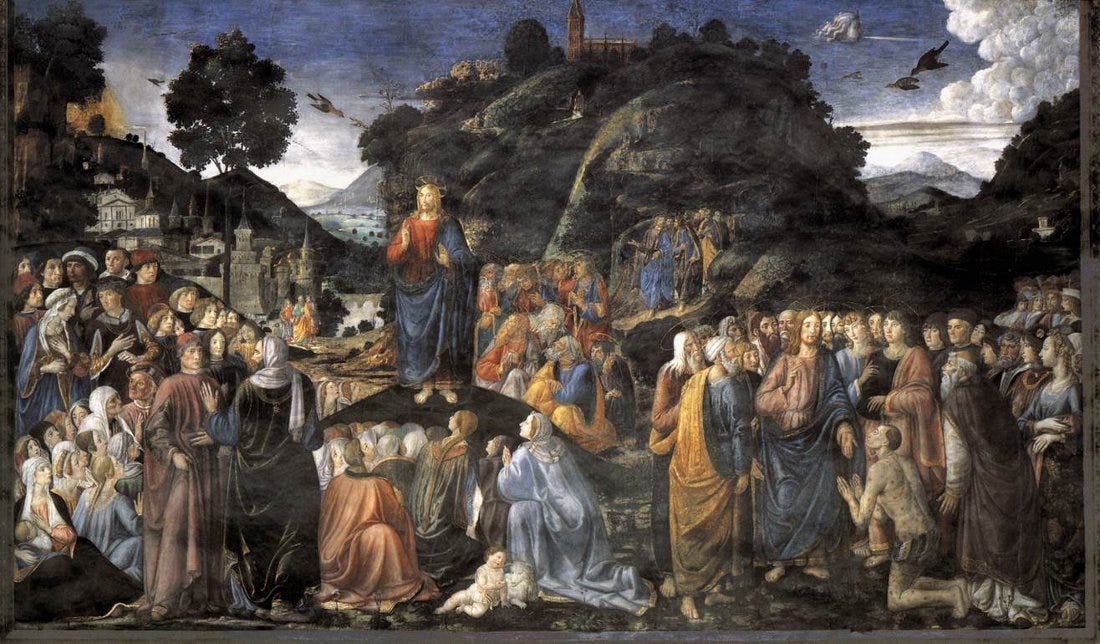
We have come to the last two verses that close the Sermon on the Mount. Strictly speaking, these verses are not part of the sermon itself. They are Matthew’s description of the response of those who heard Jesus—the crowds who were present and the disciples who had been with Him since the opening lines of chapter five.
“When Jesus had finished these words, the crowds were amazed at His teaching” (Matthew 7:28). The word Matthew uses could even be rendered “dumbfounded.” They were stunned—struck silent by the weight of what they had just heard. And then Matthew tells us why: “For He was teaching them as one having authority, and not as their scribes” (Matthew 7:29).
Those two verses are a fitting ending, because they force us to face a question that will not go away: What do we do with a Jesus who speaks like this?
The Sermon Is Bookended with a Call to Listen
There is something significant about the way the Sermon on the Mount is framed. It begins with a formal scene and ends with a formal reaction.
Matthew tells us how it started: “When Jesus saw the crowds, He went up on the mountain; and after He sat down, His disciples came to Him. He opened His mouth and began to teach them” (Matthew 5:1–2). This is deliberate, almost ceremonial. A seated teacher. A gathered audience. An opened mouth. It signals that what follows is no casual conversation but a declaration—something weighty, something authoritative.
And the ending mirrors the beginning. Jesus “finished these words,” and the people are amazed. It’s as though Matthew wants us to feel the gravity: These were not ordinary words, spoken by an ordinary man.