

We come now to the final Beatitude in our study of Jesus’ words in Matthew 5. Up to this point, we’ve seen how Jesus describes the character of those who belong to His kingdom—those who are poor in spirit, who mourn, who are meek, who hunger for righteousness, who are merciful, pure in heart, and peacemakers. But the last Beatitude takes an unexpected turn.
Jesus shifts from peace to persecution.
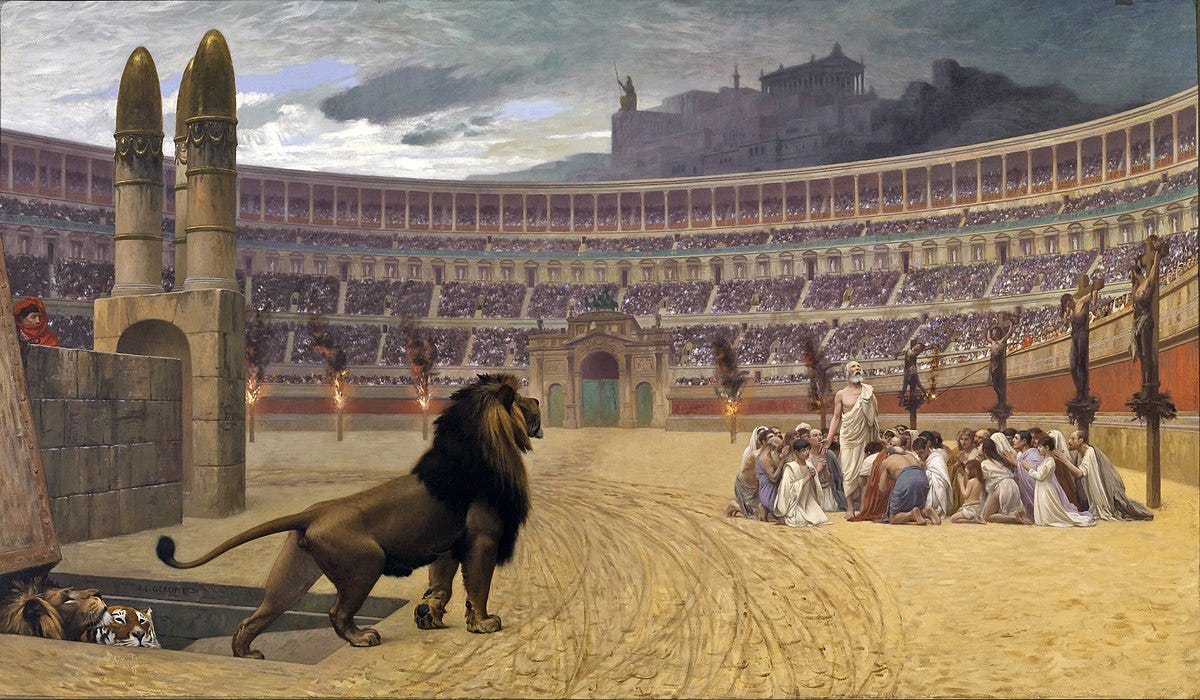
He says, “Blessed are those who have been persecuted for the sake of righteousness, for theirs is the kingdom of heaven.” Then He speaks even more personally: “Blessed are you when people insult you, persecute you, and falsely say all kinds of evil against you because of Me. Rejoice and be glad, for your reward in heaven is great—for in the same way they persecuted the prophets who were before you.”
This is the only Beatitude that Jesus gives in both the third and second person. It is also the only one He expands and repeats. That should tell us something. It marks a shift—not in tone, but in application. This final Beatitude reminds us that living out the values of the kingdom will create conflict with the world.
The contrast is sharp. Just before, Jesus blesses peacemakers—those who reconcile, restore, and reflect God’s heart. But now He speaks of being persecuted. The transition may seem abrupt, even strange. But it makes sense when we understand the deeper truth: when you pursue righteousness, you will eventually face resistance.
Jesus makes it clear that this kind of suffering isn’t just any suffering. It’s suffering for His sake—for the sake of righteousness. It’s not being mistreated because we were foolish or proud, but because we were faithful. And that kind of persecution is a mark of Christian authenticity. It confirms that we belong to Christ, and that we live by a different value system than the world.
There is a clash of kingdoms here—a confrontation between eternal and temporary values. When we hunger and thirst for righteousness, we naturally disrupt the comfortable rhythms of a world that hungers and thirsts for power, pleasure, and control. Two opposing worldviews are in conflict, and the one that reflects heaven will often provoke hostility on earth.
Jesus calls us not just to endure this persecution—but to rejoice in it.
That is a startling command. Our first instinct might be to retaliate. Or we might sulk, hide, or bear it stoically with gritted teeth. But Jesus calls us to something higher. “Rejoice and be glad,” He says, “for your reward in heaven is great.”
This perspective is echoed in Hebrews 12:2: “For the joy set before Him, He endured the cross.” Jesus endured suffering because He saw beyond it. He knew there was something greater on the other side. And He calls us to do the same. We don’t rejoice because of the pain itself. We rejoice because our suffering identifies us with Christ. We rejoice because this present pain is temporary—and it produces in us an eternal weight of glory.
We see a clear example of this mindset in Acts 5. After being arrested and beaten for preaching in Jesus’ name, the disciples left the council “rejoicing that they had been considered worthy to suffer shame for His name.” That is the spirit of this final Beatitude. They didn’t rejoice because they enjoyed suffering—they rejoiced because they knew what it meant. It meant they were counted with Christ. Their suffering had purpose.
This is a radically different perspective from what the world offers. In our culture, suffering is something to avoid at all costs. Comfort and ease are valued above all else. But in the kingdom of God, suffering is not wasted. It forms us. It refines us. It makes us more like Jesus.
This is why I sometimes say that the Beatitudes are not exactly popular material for a modern self-help seminar. Imagine advertising a conference with these themes: “Learn How to Mourn. Discover the Power of Being Meek. Find Out How You Too Can Be Persecuted for Righteousness!” You wouldn’t expect a long line of eager attendees. The world sees these traits as weakness or failure. But in God’s kingdom, they are marks of maturity.
The reality is, the more seriously we live by the values of the Beatitudes, the more we will feel like strangers in this world. The more deeply we pursue righteousness, mercy, purity, and peace, the more we will stand out. And sometimes, standing out means being opposed.
That’s because this world is not our final home. It’s a preparation—a soul-forming journey. It’s filled with both joys and sorrows. The joys remind us that something better exists, something we were made for. But they never fully satisfy. The sorrows, too, remind us: we are not home yet. We are pilgrims on the way to a better country.
In John 15, Jesus prepares His disciples for this reality. He says, “If the world hates you, you know that it has hated Me before it hated you. If you were of the world, the world would love its own. But because you are not of the world… the world hates you.”
This hatred doesn’t come because we are obnoxious or confrontational. It comes because the values we embody challenge the status quo. When you live as salt and light, you expose darkness. And darkness doesn’t like to be exposed.
That’s why Jesus says the persecution we face is like the persecution the prophets endured. They too spoke truth in a hostile culture. They too were rejected, insulted, and sometimes killed. But they were faithful. And so are we called to be.
If we are honest, we would prefer to live a quiet, unchallenged life. But the call of Christ is different. It is a call to courage. A call to live with integrity and boldness. A call to follow Jesus, even when it costs us something.
But it’s also a call to joy. Joy not rooted in circumstance, but in hope. Joy grounded in the knowledge that this life is not all there is. That what we do today echoes in eternity.
Every day is a gift. And every person we encounter is an eternal soul. That means our time here matters deeply. We are not just waiting for heaven. We are preparing for it. And as we live by the Beatitudes, we become more and more like Christ—so that the transition from this life to the next will not be so abrupt.
In the end, those who think most about heaven are often the ones who live best on earth. They hold this life loosely. They serve with joy. They love deeply. And they rejoice, even in suffering, because they know the reward is great.
The Apostle Peter, writing to believers scattered and suffering, reminds them—and us—that hardship should not take us by surprise. In 1 Peter 4:12–13, he writes “Beloved, do not be surprised at the fiery ordeal among you, which comes upon you for your testing, as though some strange thing were happening to you; but to the degree that you share the sufferings of Christ, keep on rejoicing, so that also at the revelation of His glory you may rejoice with exultation.”
Peter is telling his readers that suffering has a purpose. It is not meaningless. It is not accidental. It is a part of God's refining process. And it is temporary. The rejoicing Peter speaks of is not based on current comfort but on the anticipation of future glory. The testing we experience today is preparing us for the joy that will be fully revealed when Christ returns.
Earlier in his letter, Peter offers a word that speaks directly to the heart of every believer navigating the trials of life. In 1 Peter 1:13, he writes “Therefore, prepare your minds for action, keep sober in spirit, fix your hope completely on the grace to be brought to you at the revelation of Jesus Christ.”
This is a call to live with focused hope—not on the temporary pleasures or passing achievements of this life, but on the grace that will be fully revealed when Jesus comes again. Our hope is not built on our present circumstances. It is grounded in the promises of God, secured in the future, and made certain by Christ. It is a living hope—one that never fades.
Peter calls us to live with this eternal mindset. He reminds us that God is holding us in His grip of grace. We are not wandering aimlessly. We are pilgrims with a purpose. We are headed somewhere. We have a destination. That destination is home—our eternal home. And along the journey, God calls us to live with purpose, with clarity, and with hope.
Among all of Peter’s encouragements, one verse stands out as especially powerful. In 1 Peter 5:10, he writes “After you have suffered for a little while, the God of all grace, who called you to His eternal glory in Christ, will Himself perfect, confirm, strengthen and establish you.”
Peter doesn’t say “if you suffer.” He says “after you have suffered.” Suffering is not optional in this world. It is part of the path. But it is also brief—“a little while.” That phrase is critical. No matter how painful the struggle, how long the trial seems, in the scope of eternity it is short. That’s not meant to diminish our pain, but to place it in context. We are not trivializing our suffering—we are anchoring it in God’s greater plan.
Peter reminds us of the contrast: we suffer for “a little while,” but the glory we are called to is eternal. The God of all grace is the One who strengthens us through suffering and brings us to glory. He is the One who completes the work in us, who confirms and establishes us. He takes the lead of our suffering and transmutes it into the gold of His glory. By His grace, what once felt heavy and meaningless becomes weighty with eternal purpose.
This is not theory for Peter. He lived it. He watched Jesus suffer. He endured persecution himself. Eventually, he would die for the faith. Yet he could speak of suffering with hope because he had embraced this eternal perspective. The same was true of Paul. He wrote to Timothy near the end of his life from a Roman prison cell. In 2 Timothy 3:12, he wrote, “Indeed, all who desire to live godly in Christ Jesus will be persecuted.”
This wasn’t a warning; it was a certainty. And Paul knew what he was talking about. He was nearing the end of his race. In 2 Timothy 4:6, he said, “I am already being poured out as a drink offering.” Paul’s life had been a sacrifice, an offering to God. He had finished well, and now he was passing the baton to Timothy. He was preparing him—and us—for the journey ahead.
This journey, Paul and Peter both remind us, is not about comfort or acclaim. We are not home yet. We are strangers here—sojourners, pilgrims, aliens. And that’s not an easy mindset to keep. The world constantly presses us to believe that this life is all there is. It’s loud, persistent, and ever-present. Unless we deliberately renew our minds and saturate ourselves in Scripture, we will drift. We will forget who we are. The temporal will drown out the eternal. As Francis Schaeffer once observed, “Nature eats up grace.” In other words, the pull of the visible often overwhelms our awareness of the invisible.
That’s why we must daily realign our hearts with God's truth. Without an eternal perspective, our faith will weaken. The pressures of this world are too strong. The only way to endure suffering, the only way to remain faithful in a culture that rejects truth, is to fix our eyes on what is unseen. To treasure the things that last. To chase ambitions that won’t die with us.
Over and over again, Scripture calls us not to deny ourselves just for the sake of sacrifice—but because something better lies ahead. God made us to desire what is truly good. He calls us to pursue gain—not the gain of this world, but the eternal reward of knowing Him and living for His glory.
This idea comes through clearly in the Sermon on the Mount. Jesus calls us to store up treasure in heaven, where moth and rust cannot destroy, and where thieves cannot break in and steal. He doesn’t condemn the desire to pursue treasure. He simply challenges us to pursue the right kind. He urges us to make sure that our ambitions are eternal.
Many have said that Jesus spoke about money more than any other subject. But I would argue that Jesus used money as an illustration of a greater theme: the contrast between the temporal and the eternal. He was constantly pressing people to lift their eyes from the passing pleasures of this world to the enduring values of the kingdom of God.
Every day, we are surrounded by a culture that promotes a different gospel—a gospel of self, success, and security. The values of the Sermon on the Mount are upside-down by comparison. And that makes them hard to hold onto. But Jesus invites us to live with a vision that transcends the noise of the world. He invites us to walk a different path—a path that leads to life.
In a world that celebrates self-promotion, Jesus calls us to humility. In a world that avoids pain, He invites us to take up our cross. In a world that lives for now, He calls us to live for what is yet to come. These are not easy truths—but they are beautiful. And they are true.
So we press on, not because the road is easy, but because the destination is worth it. We fix our eyes on Jesus. We embrace the hope of His return. We remember that the sufferings of this present time are not worth comparing with the glory that will be revealed. And we walk by faith, knowing that He who began a good work in us will carry it on to completion until the day of Christ Jesus.
When we take all eight Beatitudes together, we begin to see a clear pattern. There is a logical flow and a spiritual progression. The first four focus primarily on our relationship with God, while the last four begin to shift toward our relationships with others. Jesus begins by speaking of being “poor in spirit,” which is the foundation of all spiritual growth. This is not simply humility—it is the deep awareness that we bring nothing of value before God. We have no merit of our own. Everything is gift. Everything is grace. When we come to Him with empty hands, we are in the right posture to receive.
Out of that recognition flows mourning—a mourning not merely over life’s hardships but over our own sin. We grieve because we know how far we fall short of what God created us to be. Apart from grace, we would never even recognize our need, let alone be able to pursue what is truly good and holy.
This mourning naturally leads to meekness. The meek are those who understand who they are before God and are amazed that the God of the universe calls them His beloved children. There is no presumption, no pride—only wonder. And from that place of meekness comes a hunger and thirst for righteousness. Those who have been humbled and broken now long for the restoration that only God can give. They want what is right—not just in their own hearts, but in the world around them. They crave righteousness as a hungry person craves food or as a parched soul seeks water.
So we see in these first four Beatitudes a movement of the soul toward God. It begins in recognition of our bankruptcy and leads to a holy desire for His righteousness. This inner transformation is the root from which the outward expressions grow.
When we shift to the second four Beatitudes, the focus moves toward others. “Blessed are the merciful, for they shall receive mercy.” We are able to show mercy to others because we have first received mercy ourselves. This is the natural response of a heart that has encountered grace. And yet, many of us find it hard to forgive—not because God’s forgiveness is inadequate, but because we often struggle to truly grasp it. Sometimes it is easier to believe that God has forgiven us than to forgive ourselves. Yet Scripture tells us we have been accepted in the Beloved. And as recipients of such mercy, we are called to reflect it toward others.
This flows into purity of heart. As I’ve said before, purity of heart is not just about avoiding sinful actions. It is about sincerity. Integrity. A life without duplicity. It’s about becoming the kind of person who is honest before God and others, not manipulative or self-serving. In this context, purity of heart speaks especially to how we approach relationships. Are we using people, or are we loving them? Are we living as givers or as graspers?
From this kind of inner wholeness and relational honesty comes the ability to be a peacemaker. But it’s important to understand what true peacemaking is. It is not peace at any price. It’s not appeasement or compromise. It is the commitment, as Paul says in Romans 12:18, to be at peace with all people “so far as it depends on you.” We cannot control how others respond, but we can control whether we approach them with a spirit of humility and peace.
Still, this approach will often be misunderstood. The world has its own definition of what it means to be “blessed.” According to the world, the blessed are the rich, not the poor in spirit. The blessed are the powerful and assertive, not the meek. The blessed are those who look out for number one, not those who hunger for righteousness. Everything Jesus teaches here runs counter to the values of the world.
In fact, you could take the Sermon on the Mount, turn it upside down, and you’d have a fairly accurate summary of the world’s system. That’s why embracing this teaching takes real risk. To live this way requires courage. It demands trust. It pushes us beyond what is comfortable and challenges us to choose a different way—a way that will often be mocked or misunderstood.
And yet, it is the only way that leads to true life. This is why we need one another. The Christian life is not meant to be lived in isolation. We need the community of believers to encourage one another, to build one another up, and—as Hebrews 10:24 says—to “stimulate one another to love and good deeds.” We help each other hold onto the values that God says are important, especially when the world is pulling us in the opposite direction.
This is a radical reordering of our values. It’s a complete reversal of what the world celebrates. And part of our calling is to be people who not only dream about progress and achievement, but who are also wise enough to think about the end. Because the end determines the meaning of the story.
Shakespeare understood this well. In his plays, a comedy wasn’t defined by whether it made you laugh—it was defined by how it ended. A comedy ends well. That’s why Dante called his epic work The Divine Comedy. He understood that in the grand story of God, things would ultimately resolve in joy. And in Shakespeare’s comedies, the path to that good ending often includes confusion, pain, and apparent hopelessness. Everything seems to unravel before it finally comes together. But in the end, what looked like tragedy turns out to be redemptive.
That’s the Christian view of history. We believe that suffering can have meaning. That God can redeem what is broken. That the last act is not written by chaos, but by a sovereign and loving God. In fact, the Christian worldview is the only one that offers a coherent answer to suffering—not by denying it, but by transforming it. We see this most clearly in the cross of Christ. What looked like the greatest defeat became the greatest victory.
Suffering, then, is not something to be feared. It is something God can use to deepen us, to refine us, and to prepare us for glory. He does not waste our pain. The misunderstandings, the trials, the losses—they are all part of a greater story. And when we look back from the end, we will see that what seemed unbearable in the moment was used by God to create a depth and richness in our souls that nothing else could have produced.
So we hold fast. We live by a different script. We pursue the Beatitudes not because they are easy, but because they are true. And we do so with the confidence that the end of the story has already been written—and that it ends well.
Questions for Reflection
How does your view of suffering change when you understand persecution as a mark of being identified with Christ?
Which of the Beatitudes do you find most challenging to live out, and why?
How can you cultivate a more eternal perspective that allows you to rejoice even in hardship?
What are specific ways you can live as salt and light in your community without compromising your values?