

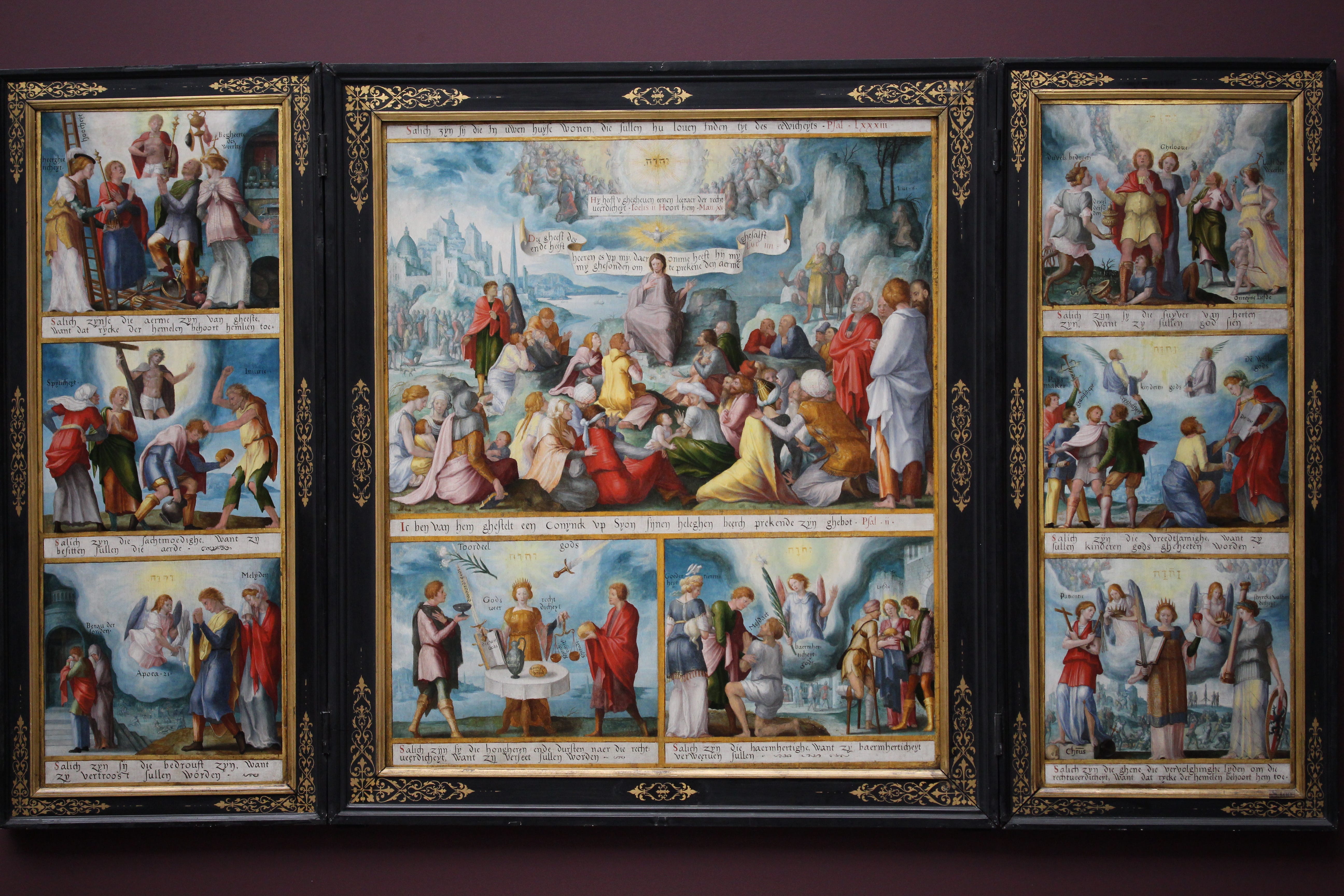
We are continuing our study of the Beatitudes, and as we do, it’s important to move slowly and reflect deeply. These statements are rich and profound, each one leading naturally to the next in a seamless structure. They are not merely a collection of sayings, but a blueprint for the life of a disciple. They carry a logic, a progression, and a spiritual depth that require thoughtful meditation.
We began with “Blessed are the poor in spirit, for theirs is the kingdom of heaven.” This is the foundation of the spiritual life. Poverty of spirit is the awareness that we bring nothing of value to God. We come empty-handed, recognizing our complete need for His mercy and grace. We do not earn, deserve, or achieve salvation—it is a gift from beginning to end. Once we truly grasp our spiritual poverty, we begin to mourn—not only over the brokenness around us, but over the sin within us. This is the second Beatitude: “Blessed are those who mourn, for they shall be comforted.”
True mourning arises from the recognition of our sinfulness. We see the damage it has done—to ourselves, to others, and to our relationship with God—and we grieve. That grief leads to humility. The third Beatitude follows: “Blessed are the meek, for they shall inherit the earth.” Meekness is not weakness. It is strength under control. It is a posture of humility before God and others, a willingness to submit to His will, and a recognition that everything we have is a gift.
From there we move to “Blessed are those who hunger and thirst for righteousness, for they shall be satisfied.” Spiritual hunger is not a one-time experience. It is a lifelong pursuit. As we grow in our awareness of God’s holiness and our own need, we begin to long for righteousness—not only in our standing before God but in the way we live. This hunger grows deeper with time. We continue to drink from the well of the Word and to feed on the solid food of truth. And though we are satisfied in Christ, we never stop growing in our desire for Him.
The first four Beatitudes focus primarily on our relationship with God—our posture before Him, our hunger for His righteousness. But the next four Beatitudes turn our attention outward, toward our relationships with others. “Blessed are the merciful, for they shall receive mercy.” Mercy is not merely an attitude—it’s an action. It is the willingness to relieve suffering, to extend compassion, to forgive.
Mercy and grace are often linked, but they are not identical. Grace speaks to pardon and restoration—God reinstates us, brings us back. Mercy is more about the alleviation of pain and distress. Grace addresses our guilt; mercy addresses our misery. And both are essential to the Christian life.
Now, some may ask: “If I don’t forgive others, will God not forgive me? If I don’t show mercy, will I be denied mercy?” At first glance, that sounds like we’re earning forgiveness or mercy by our actions. But the answer is deeper. We do not earn mercy—we reveal it. We demonstrate that we’ve received God’s mercy by showing it to others. When we understand how deeply we’ve been forgiven, we are able to forgive. If we cannot show mercy, it may be that we haven’t truly received it.
Consider how quickly we demand justice from others yet expect mercy for ourselves. When someone cuts us off in traffic, we want justice. But when we cut someone off, we want grace. This double standard runs deep. Jesus is calling us to something better. We are to extend to others what God has given us—mercy without condition.
This truth is beautifully captured in Shakespeare’s The Merchant of Venice. Shylock demands his “pound of flesh”—a picture of unyielding justice. But he is rebuked with the words:
The quality of mercy is not strained.
It droppeth as the gentle rain from heaven
Upon the place beneath. It is twice blessed:
It blesseth him that gives and him that takes...
And earthly power doth then show likest God’s
When mercy seasons justice.
True mercy reflects the heart of God. And if justice were our standard, none of us would see salvation. We pray for mercy because we need it—and in praying for it, we learn to show it.
When we live as the meek, we acknowledge to others that we are sinners. When we live as the merciful, we extend compassion because we recognize that others are, too. The Bible doesn’t paint a sentimental picture of humanity. It tells the truth about the human condition. We are not basically good people who occasionally mess up—we are deeply flawed, and our sin has alienated us from God and from one another.
But here is the wonder of the gospel: God Himself provides the solution. He underwrites the cost of our redemption. He makes a way for us to be restored. And having received that grace, we are called to show the same mercy to others.
Someone once asked, “If we are made new in Christ, are we still defined by our old struggles—like addiction or sin?” It’s a good question. In one sense, we must be honest about the continuing presence of the flesh. If someone struggles with addiction, that struggle may persist throughout their earthly life. But it is not their true identity. We must not let sin define us.
At the same time, we must not pretend the struggle isn’t real. There is a tension between who we are in Christ—holy, righteous, new—and the ongoing battles we face in the flesh. This tension is part of what it means to be human. With one hand we touch heaven, with the other we touch earth. We live between two worlds.
That’s why confession matters. We’ve largely lost the discipline of confession, partly because we fear the judgment of others more than the opinion of God. It’s often easier to confess to God than to another person. But healing and freedom come when we name our struggle—when we let someone else in. Sin thrives in secrecy. But once it’s exposed, its power is broken.
When we confess our sins to someone we trust—someone who will pray with us and hold us accountable—we begin to walk in freedom. Confession doesn’t define us by our failure. It reminds us that we are new creatures who still struggle with the flesh. Because we know our identity is in Christ, we can be honest about our weaknesses. If we didn’t know who we truly are in Him, we’d never want anyone to see our struggles.
So, this is where we find ourselves—learning to live out the mercy we’ve received, walking humbly before God and others, and refusing to let the flesh define us. The Beatitudes call us to this way of life. They reveal a character shaped by grace and a heart conformed to Christ.
Let’s now consider the Beatitude that says, “Blessed are the pure in heart, for they shall see God.” This statement goes deep into the center of our spiritual life. Soren Kierkegaard, the Danish philosopher, once titled a book Purity of Heart Is to Will One Thing. That captures the heart of this teaching. A pure heart is a unified heart—a heart not divided between competing desires but focused entirely on one thing: God Himself.
David prayed for this in Psalm 51:6 and 10: “Behold, You desire truth in the innermost being,” and “Create in me a clean heart, O God.” David understood that purity isn’t just outward cleanliness. It’s about the inner person—what we think, desire, and pursue in our private lives.
In Jesus’ day, the Pharisees were experts in outward purity. They knew how to clean vessels, avoid defilement, and follow ceremonial rules. But their obsession with external actions often missed the point entirely. Their hearts were untouched. Jesus raised the standard—not by adding more rules, but by revealing that righteousness begins on the inside. Outward behavior without inward change is hollow. The Law, as Paul later taught, was never meant to save anyone. It was a tutor, a guide that led us to recognize our need for grace (Galatians 3:24). Only Jesus could fulfill the Law completely. And through Him, we gain true freedom as sons and daughters of God.
So when Jesus speaks of purity of heart, He is talking about more than just avoiding sin. He’s talking about sincerity—about integrity of being. It’s not just about following the rules. It’s about living a life that flows from a heart aligned with God.
There’s a difference between “rule righteousness” and “heart righteousness.” Rules are important, but righteousness goes beyond a list of dos and don’ts. Righteousness is about shalom in relationships. It’s about choosing what is best and loving others rightly. When we are right with God, we begin to live rightly with others. Right actions flow from a right heart. That’s heart righteousness.
The pure in heart are single-minded people. They aren’t pulled in every direction by conflicting motives. They’re not trying to serve both God and the world. All of us know what it feels like to be divided—to say one thing but feel another, to act one way around people and another in private. This is the tyranny of the divided self. But Jesus calls us out of duplicity and into wholeness. He will later describe this in Matthew 6 as having a “single eye.” The single eye sees clearly. The pure heart pursues one thing with simplicity and truth.
The opposite of simplicity is duplicity. Duplicity divides us. It pulls us in two directions. We try to appear one way while hiding something else. We project an image to the world while concealing what’s really inside. But the more we walk with God, the more He calls us into transparency—with Him, and eventually, with others.
The word “sincerity” comes from two Latin words: sine (without) and cera (wax). In the ancient world, dishonest potters would fill cracks in their pottery with wax to hide flaws. But when exposed to sunlight, the wax would melt, and the imperfections would show. Honest potters would label their jars “sine cera”—without wax. They were authentic, trustworthy, solid.
That’s what it means to be sincere—to have nothing to hide. It means being the same person in the light as you are in the dark. It means being someone who can stand the heat of examination. We’re not perfect, but we’re growing. We are moving toward becoming people without guile.
Jesus was a man without guile. In John 1:47, He said of Nathanael, “Behold, an Israelite indeed, in whom is no guile.” That’s the kind of person we want to be—open before God, without pretense. And as we become God’s people in this way, we also become people for others. As Dietrich Bonhoeffer once described Jesus, “He was a man for others.” When we find our identity in God and not in the opinions of people, we can live freely, with integrity and courage.
A person of integrity says what they mean and lives what they say. Their yes means yes, and their no means no. They are not manipulated by fear or shaped by the world’s standards. And that kind of integrity is exactly what people look for in leaders. More than charisma or talent, people want leaders they can trust.
At the core of many objections to Christianity is the question: “Can I trust God?” People ask, “Is Jesus the only way?” “What about those who’ve never heard?” “Why does God allow suffering?” “Is the Bible reliable?” Underneath all of these is a deeper issue: “Is God trustworthy?”
I once met a man who said the only person he trusted was himself. His whole outlook on life was based on self-reliance. But trusting in yourself is dangerous. Self will always let you down. That’s the reality. The younger we are, the more we tend to believe in our own strength. But eventually, we all reach the limits of our ability. The illusion fades, and we discover that we were never meant to be our own saviors.
One of the dangers of duplicity is that over time, we can begin to believe our own lies. M. Scott Peck, in his book People of the Lie, describes how repeated deception erodes a person’s grip on reality. A person becomes so used to hiding that they lose their ability to tell the truth—even to themselves. That’s the real danger of impurity of heart. It blinds us.
I’ve seen this in real life—people so committed to being right that they can’t admit they’re wrong, even when the evidence is overwhelming. One woman drove through a stop sign and nearly caused an accident. Her response? “He was going too fast.” Even if 100 people had told her she was wrong, she wouldn’t have believed it. That’s how pride and duplicity work—they blind us to the truth.
Sometimes people are so self-deceived that they can’t even acknowledge sin. I once spoke with a woman who said she had never sinned. That level of blindness is stunning. Another man I met held a view that one sin—any sin—could make you lose your salvation. We pressed him on the logic of that belief: “So if you go half a mile over the speed limit, do you lose your salvation?” He kept pushing the idea further until it became absurd. Eventually, it was clear that his real problem wasn’t legalism—it was pride.
And that’s the heart of it. Pride is the sin that gives birth to all others. To say you have no sin is itself a deep sin—the sin of self-righteousness. Scripture tells us that “if we say we have no sin, we deceive ourselves” (1 John 1:8). A pure heart begins with honesty—with a willingness to confess our faults and turn toward God.
We won’t be perfect in this life. But we are called to grow. God has made us new. Now our task is to live out what He has put in. That’s the journey of discipleship: to become more sincere, more transparent, more whole. And it all starts with a heart that wants one thing—God.
After exploring what it means to be pure in heart—to have a single-minded devotion to God—we now turn to the next Beatitude: “Blessed are the peacemakers, for they shall be called sons of God.” This is not merely a call to avoid conflict. It is a call to pursue peace with both courage and wisdom. But we must first understand that we cannot see God without purity of heart. And that purity is something God cultivates in us through a lifelong process of transformation.
We often carry deep areas of brokenness within us—hidden motivations, unexamined pride, and secret sins beneath the surface. Like an iceberg, most of our internal life lies below the waterline. As we walk in the light of Christ, that hidden part begins to melt and rise to the surface. The Holy Spirit gently brings things to light—not all at once, or we would be overwhelmed, but little by little. God, as the perfect Teacher, gives us just enough light to grow. If we respond to the light we have, He gives more. If we resist, He waits and tests us until we learn the lesson.
None of us can claim perfectly pure motives. Even our most noble actions are often tainted by mixed intentions. If we were to dig down into the layers of our hearts, we might not survive the trip. That’s why humility, righteousness, and wisdom are so elusive. As soon as we think we’ve attained them, we probably haven’t.
But the hope of the gospel is this: our struggle with the flesh will one day end. The day will come when we will be fully known and fully transformed. We will look upon God without fear or shame, and with joy. We will reflect His purity perfectly, face to face.
And so we come to the peacemakers. Peacemaking flows naturally from purity of heart. A heart that is not divided by falsehood, bitterness, or hidden agendas will naturally seek peace. That peace begins in our own souls, but it extends outward into the relationships and communities around us.
Peacemaking is not passive. It’s not about keeping quiet or avoiding conflict. It’s about restoring what’s broken. In Scripture, peace is closely tied to reconciliation—bringing together what has been separated. The Apostle Paul warned the Corinthians about the serious sin of disunity in the church. Some were creating factions, elevating themselves, and dividing the body. Paul wrote strongly about this in 1 Corinthians 11, where he described how their divisiveness corrupted even their observance of the Lord’s Supper.
He said that those who ate and drank “in an unworthy manner” were guilty of dishonoring the body and blood of Christ. Why? Because they were tearing apart the unity of the body. Some were eating and drinking before others arrived. Some were getting drunk while others went hungry. Paul said that some in the community were sick—and even dying—because of this unrepentant sin of division.
Unity matters. God takes it seriously. To sin against the unity of the body is to grieve the Spirit who binds us together. Paul’s words in Romans 12:18 and Hebrews 12:14 urge us to pursue peace with all people and to strive for peace within the church.
But pursuing peace doesn’t mean sacrificing truth. To be a peacemaker is not the same as being an appeaser. True peace is costly. Dietrich Bonhoeffer warned against “cheap grace,” and in a similar way, we must avoid cheap peace—peace that avoids hard conversations, peace that refuses to confront wrongdoing, peace that ignores sin.
Sometimes real peace requires the pain of humility. We may need to apologize for something we did. Our pride resists that. At other times, we may need to rebuke someone who has hurt us. That takes courage and wisdom. Many of us hope that conflict will resolve itself if we just ignore it. But it rarely does. More often, it festers.
Peacemaking involves speaking the truth in love (Ephesians 4:15). It involves humility, honesty, and a willingness to see things from the other person’s perspective. Even when we are the ones who’ve been wronged, we should try to understand the other person’s actions. That doesn’t excuse sin, but it guards us from demonizing others.
The path of reconciliation often includes four essential steps:
Contrition – The one who sinned must feel genuine sorrow.
Confession – That person must admit their wrong before God and to the one they hurt.
Forgiveness – The offended party must be willing to extend grace, which is never owed but always offered freely.
Restitution (sometimes) – In cases of loss or damage, restoration may require action to make things right.
These steps mirror how we are reconciled to God. The Holy Spirit convicts us of sin. We respond with confession and repentance. God, through Christ, offers grace. And when we receive it, the relationship is restored. It’s not cheap grace—it’s costly. Jesus bore our sin on the cross. God never forgives sin itself—He forgives sinners. Sin always has a price, and Jesus paid it fully.
That’s the kind of forgiveness we are called to reflect in our relationships. If we refuse to forgive others, we reveal that we haven’t truly grasped our own need for grace. We hold grudges because we forget how much we’ve been forgiven.
Sometimes reconciliation isn’t possible—at least not fully. The other person may refuse to admit wrongdoing. They may withhold forgiveness. In those cases, we do what we can. We seek peace as far as it depends on us (Romans 12:18). If the other person won’t respond, we are not held responsible for their refusal. Our hearts must remain open and clean before God.
We must also be cautious of a form of false peace in the church. Some pursue unity at the cost of truth. They’re willing to lay aside doctrinal clarity or moral conviction in the name of harmony. But that kind of peace is shallow. It avoids offense, but it also avoids transformation.
Evangelism, too, can fall into this trap. Some present the gospel as mere forgiveness—“God loves you, accept His grace, and move on.” But real evangelism includes the call to discipleship. It calls us to turn from sin and follow Christ. The gospel is not just about what we’re saved from—it’s about what we’re saved for. True peace is rooted in Christ’s lordship. It cannot be divorced from obedience.
A life of peace is a life shaped by the fruit of the Spirit. It is marked by gentleness, patience, humility, and love. But it is also marked by courage, conviction, and truth. As God’s children, we are to be peacemakers in every sense—healing what is broken, restoring what is lost, and bearing witness to the reconciliation we ourselves have received.
This kind of peace is not cheap. It is not always easy. But it is worth everything.
Questions for Reflection
How does recognizing your own need for mercy influence your willingness to show mercy to others?
What does it mean to you that your deepest identity is in Christ, even while you still wrestle with sin and weakness?
In what areas of your life are you being invited to show mercy or pursue reconciliation?
How do duplicity and hidden agendas keep you from experiencing the freedom of purity of heart?