

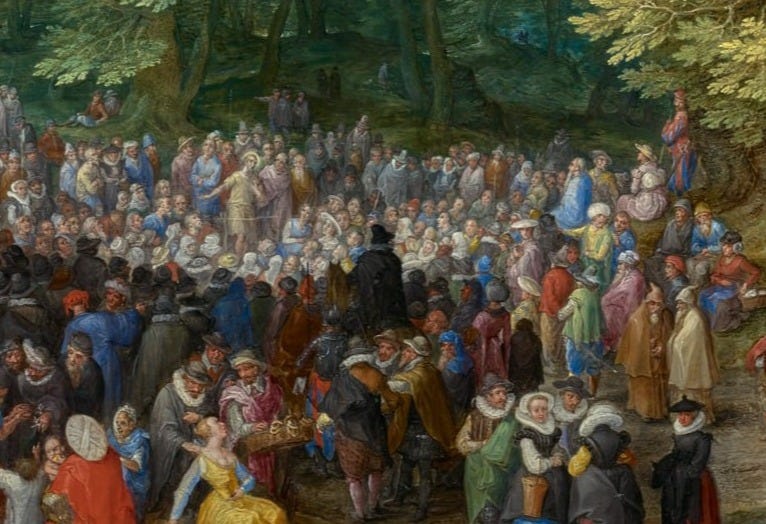
We’ve been discussing the Sermon on the Mount—its structure, its rich relevance, and its direct connection to daily life. It speaks to relationships, to character, to how we influence the world around us. It reaches into the core of our experiences and brings before us profound truths. But the question we must now wrestle with is this: Is it livable? Can we actually practice what Jesus teaches here? Is it truly practical?
If you haven’t read the Sermon on the Mount recently, I encourage you to do so with fresh eyes and a prayerful heart. And if you have read it lately, you may have found yourself wondering, “How can anyone live like this?” On the surface, it seems to ask the impossible. Many readers and scholars throughout history have admitted this, suggesting that while the sermon is beautiful and compelling, it’s simply not attainable. It’s an ideal too lofty for human nature.
John Stott captures this dilemma well. He notes that people know too much about human pride to believe meekness is natural. We’re familiar with the strength of sexual desire, so refraining from lustful thoughts feels out of reach. We’re overwhelmed by the worries of life, so how can we truly stop being anxious? Anger and the longing for revenge are deeply embedded in us—so how are we supposed to love our enemies? Stott even raises the social concern: Is turning the other cheek not only unrealistic but dangerous? Does it invite more injustice rather than restrain it? Some conclude that the Sermon on the Mount is a lovely vision but not a guide for actual living. It's the dream of a visionary, not the plan of a realist.
This leads to a deeper issue: the way many commentators approach the Sermon on the Mount. If you read through various interpretations, you’ll find a common pattern—they try to soften Jesus’ commands. They don’t want to say it’s impossible, so they reframe it, reinterpret it, or qualify it. In doing so, they reduce the sermon’s power. They replace the radical call of Jesus with something more manageable, something that fits into our moral comfort zone.
Some suggest that Jesus meant this as a temporary ethic—an “interim ethic,” assuming His return was just around the corner. In that light, maybe it made sense for a short season. But this view doesn’t stand up under scrutiny. The message of the Sermon on the Mount is far too weighty, too enduring, to be limited to a brief moment in history.
Let’s consider the Beatitudes in Matthew 5. In the next article, we’ll look closely at verses 3 through 8—those who are poor in spirit, who mourn, who are meek, who hunger and thirst for righteousness. How do we live like that? How do we show true mercy or maintain purity of heart? How can we be peacemakers or endure persecution with grace? Jesus doesn’t merely describe ideal traits—He describes a way of life that seems nearly unreachable.
And in chapter 6, Jesus addresses the anxiety we all face. He tells us not to worry, yet we live in a world full of instability. The economy shifts daily. Global threats loom large. The pressures of life close in. How are we to live with peace—real peace—in such a world? How can we pursue the kingdom of God and His righteousness above everything else, when everything else demands our attention? Is it even possible to do what Jesus asks?
And then there’s the narrow gate. Jesus says, “Enter through the narrow gate. For the gate is wide and the road is broad that leads to destruction, and many enter through it. But the gate is narrow and the road is difficult that leads to life, and few find it” (Matthew 7:13–14). What do we do with that? Are we really able to find and walk that narrow path?
Think about your own response when you read the sermon. What goes through your mind? When Jesus says, “You’ve heard that it was said, ‘You shall not commit murder,’ but I say to you that everyone who is angry with his brother will be liable to judgment” (Matthew 5:21–22), how do you respond?
One person shared this: “I listen to the Bible on CD every night before bed. I just went through Matthew again, and honestly, hearing the Beatitudes left me feeling down. It was almost depressing. I thought, ‘You’re such a failure. You don’t have any of those qualities.’ The part about plucking out your eye or cutting off your hand, or that being angry is as bad as murder—it’s overwhelming. I ended up feeling defeated.”
It’s true. The Sermon on the Mount can leave us feeling exposed and discouraged. It highlights the distance between our reality and God’s standard.
But someone else in that conversation responded, “Yes, but I think that’s the point. This isn’t about achieving perfection on our own. It’s about realizing that we can’t. The sermon strips away the illusion that we’re good enough by society’s standards. It reveals our need for grace.”
That’s exactly right. When Jesus contrasts “You’ve heard it said…” with “But I say to you…,” He isn’t just tweaking the law. He’s raising the bar to expose the heart behind it. The Pharisees were experts in appearing righteous, but Jesus exposes that their hearts were far from God. They reduced God’s law to a checklist—external behaviors that could be measured. Jesus reclaims the law as something deeply inward. It’s not only about actions but about motives. He’s not looking for performance. He’s after transformation.
This, then, is the challenge: works-based righteousness is not only hard—it’s impossible. That’s why we say the Christian life isn’t just difficult; it’s impossible without the grace and power of God. You cannot live the Sermon on the Mount in your own strength. That’s the message.
Jesus uses the Sermon on the Mount in the same way Paul says the Law was used—as a tutor to lead us to faith (Galatians 3:24). The Law was never meant to save. It was meant to reveal our need for a Savior. No one could keep the Law—not perfectly. The Law exposes our brokenness.
Take the Ten Commandments. How well are we doing with those? Think about coveting—how easily that sneaks into our hearts. Or consider the greatest commandment: to love the Lord your God with all your heart, soul, mind, and strength. Who can say they’ve truly done that? The Law—and by extension, the Sermon on the Mount—shows us our need for grace.
One person summed it up this way: “It’s not really about arriving at the destination; it’s about walking the journey.” That’s an important perspective. Matthew 5:48 says, “Be perfect, therefore, as your heavenly Father is perfect.” What do we do with that? Do we give up? No. That verse doesn’t point us to despair—it points us to dependence.
Earlier in chapter 5, Jesus says, “Unless your righteousness surpasses that of the scribes and Pharisees, you will never enter the kingdom of heaven” (Matthew 5:20). That’s already hard to hear. But when He ends with, “Be perfect,” it can feel crushing. Yet it’s meant to draw us to a deeper place. Not to give up—but to give in. To surrender. To recognize that only through Him can we become what He calls us to be.
The Sermon on the Mount is not an impossible burden; it is a holy invitation. It calls us to depend on the One who alone can live this life through us.
On the other hand, some claim they follow the Sermon on the Mount completely. Have you ever heard someone say, “I live by the Sermon on the Mount”? I have. And to be charitable, I can only assume they’ve never actually read it. That’s probably the kindest thing we can say. Because once you read it carefully and honestly, such a claim seems absurd.
Try asking people on the street, “How do you get to heaven?” Most will say some version of: “Do good things,” “Keep the Ten Commandments,” “Live a good life,” “Go to church,” “Give money,” “Read the Bible,” or “Follow the Golden Rule.” The two answers I hear most often are: “Keep the Ten Commandments” and “Live by the Golden Rule.” But let’s think about that for a moment.
Who can truly keep the Golden Rule—“Treat others as you would want them to treat you”? This means consistently putting others before yourself in every way, in every moment. How do you do that in traffic, for example? It’s extremely difficult. So when someone casually says, “I live by the Golden Rule,” I’ll sometimes challenge them. “Do you live by that rule perfectly, all the time, in every way? With your spouse? With your coworkers?”
Unless they’re completely out of touch with reality, they’ll admit they fall short. Then I ask, “What percentage of the time do you follow it? Seventy percent? Fifty-one percent?” At that point, the conversation usually gets a little awkward. “I try to do my best,” they might say. So I follow up, “Do you always try your best, every time, in every situation?” The truth is, nobody does. And if we can’t even define what “trying your best” looks like, how can we find any security in that? On what basis would we know if we’re truly living up to it?
Then there’s the Ten Commandments. People often say they follow those, too. So I’ll ask them, “Can you list them?” Most people, even churchgoers, can’t. If you can’t name them, how can you know if you’re keeping them? Wouldn’t it make sense to know what they are if your eternal destiny depends on them? And once you list them out, you quickly realize that keeping them perfectly is impossible.
The Apostle Paul had a similar experience. His words in Romans 7 show us the deep struggle he felt. When he was confronted by the truth of the Law, he saw how impossible it was to truly keep it. Jesus, in the Sermon on the Mount, does something similar. He pulls back the curtain on the true nature of the Law. He shows us that the Law isn’t just about external actions—it’s about the heart. Religion often reduces life with God to rituals and outward behaviors. But Jesus calls us deeper.
Paul writes in Romans 7:4–5: “Therefore, my brethren, you also were made to die to the Law through the body of Christ, so that you might be joined to another, to Him who was raised from the dead, in order that we might bear fruit for God. For while we were in the flesh, the sinful passions, which were aroused by the Law, were at work in the members of our body to bear fruit for death.”
Paul says the Law stirred up sinful desires. We’ve all experienced this. It’s like when you see a sign that says “Wet Paint – Do Not Touch.” What’s the first thing you want to do? Touch it! Or a sign that says, “Don’t walk on the grass”—suddenly it feels like an invitation. Tell a child, “Don’t eat your peas with a knife,” and what’s the first thing he tries? Balancing peas on a knife. He had never even considered it before you said something. But now he can’t stop thinking about it.
There’s a story of a hotel in Houston that had a restaurant with huge plate-glass windows on the first floor. Above it was a second-floor balcony. People staying there would sometimes try to fish in the pond outside by casting their lines from the balcony. The problem? Their sinkers kept breaking the windows. Why would anyone even think to do such a thing? Because of a sign that said, “Do Not Fish from the Balcony.” That idea hadn’t occurred to anyone—until they saw the sign. When the hotel removed the sign, the problem stopped. The sign itself provoked the behavior it was trying to prevent.
This is human nature. We see the same thing in our kids—and in ourselves. A rule or law often sparks the very behavior it prohibits.
That’s Paul’s point. He continues in Romans 7:6: “But now we have been released from the Law, having died to that by which we were bound, so that we serve in newness of the Spirit and not in oldness of the letter.”
When we come to Christ, we die to the old system of law and performance. The Law can no longer condemn someone who has died. Think of it like this: A man drives drunk, speeds through town, hits a pedestrian, tries to flee the police, and crashes his car. When the officer arrives, the man is dead. Would it make sense to take the body to court? Of course not. You can’t prosecute a corpse. Death ends the legal demands.
In the same way, Paul says, we have died with Christ and have been raised into new life. We are no longer under the law’s judgment. We are now free to walk by the Spirit, not by our own efforts.
Paul continues in verses 7–8: “What shall we say then? Is the Law sin? May it never be! On the contrary, I would not have come to know sin except through the Law. For I would not have known about coveting if the Law had not said, ‘You shall not covet.’ But sin, taking opportunity through the commandment, produced in me coveting of every kind; for apart from the Law sin is dead.” He’s not saying the Law is bad. Rather, it reveals what’s already broken in us. The Law was meant to show us the problem, not to fix it. It shines a light on our condition but offers no power to change it.
Paul explains further in verses 9–12: “I was once alive apart from the Law; but when the commandment came, sin became alive and I died. And this commandment, which was to result in life, proved to result in death for me. For sin, taking an opportunity through the commandment, deceived me and through it killed me. So then, the Law is holy, and the commandment is holy and righteous and good.”
What’s his point? The Law exposes our sin. It shows us what’s truly going on in our hearts. It reveals the gap between God’s holiness and our human weakness. That’s why we can’t live the Christian life on our own. That’s why we need grace.
In the end, the Sermon on the Mount doesn’t give us a list to accomplish. It gives us a mirror. It shows us who we are apart from Christ—and who we can become through Him. It drives us not to self-effort, but to surrender. The truth is this: the Sermon is attainable, but only by those who have been born again—who have been filled with the Spirit and live by His power.
At every moment, we can choose: walk in the flesh or walk in the Spirit. And as we choose the Spirit, the impossible becomes possible—not by our effort, but by His grace.
This is important to understand. Religion tells us we’re basically good people who just need a little help. But Scripture tells the truth: we are broken, and we cannot save ourselves. Jesus put it plainly in Mark 7: “That which proceeds out of the man, that is what defiles the man. For from within, out of the heart of men, proceed evil thoughts, fornications, thefts, murders, adulteries, deeds of coveting and wickedness, as well as deceit, sensuality, envy, slander, pride and foolishness” (vv.20–22). “All these evil things proceed from within and defile the man” (v.23).
We cannot lift ourselves up. As G.K. Chesterton said, trying to save ourselves is like trying to lift a bucket while standing inside it. It doesn’t work. We can’t bridge the gap by pulling on our own bootstraps. That’s why the Sermon on the Mount—like the rest of Scripture—drives us to grace.
When we truly read the Sermon on the Mount, it humbles us. It forces us to say, “Lord, I cannot do this without You.” That kind of dependence is the very heart of spiritual growth.
And here’s something the saints have said throughout the centuries: as you grow in Christ, two things become increasingly clear. First, you become more aware of your own sin. Second, you become more aware of God’s holiness. That’s not discouraging—it’s liberating. It shows you the depth of grace. It shows you how much you need it and how freely God offers it.
If you believe you can fulfill the Law on your own, then Christ died for nothing. But when you see that the Sermon on the Mount is humanly impossible, it opens the way for the Spirit to do what only He can do.
Here’s the wonder of it: the more you grow in Christ, the more you realize how far short you fall—and the more you realize how much greater God is than you imagined. The gap widens. But the grace that bridges the gap also deepens. That’s how you know you’re growing. The mature believer is not the one who thinks they need God less—it’s the one who knows they need Him more.
So, as you read the Sermon on the Mount, don’t be discouraged. Let it drive you to grace. Let it remind you that God reaches down to us because we can never reach up high enough to Him. And remember, this Sermon presupposes the new birth. Jesus was speaking to His followers—those who had begun the journey of faith. Only those who have been born again can read the Sermon rightly—not with naive optimism or hopeless despair, but with a clear-eyed dependence on the Spirit of God.
Questions for Reflection
In what ways does the Sermon on the Mount reveal deeper issues of the heart, beyond just outward behavior?
What is your response to the idea that the Christian life is not difficult, but impossible without the Spirit?
Can you identify moments when your own efforts fell short and God’s mercy met you there?
As you grow in Christ, are you becoming more aware of your own sin and God’s holiness?