
Sermon on the Mount (Part 2)
The Practicality of Jesus Teaching

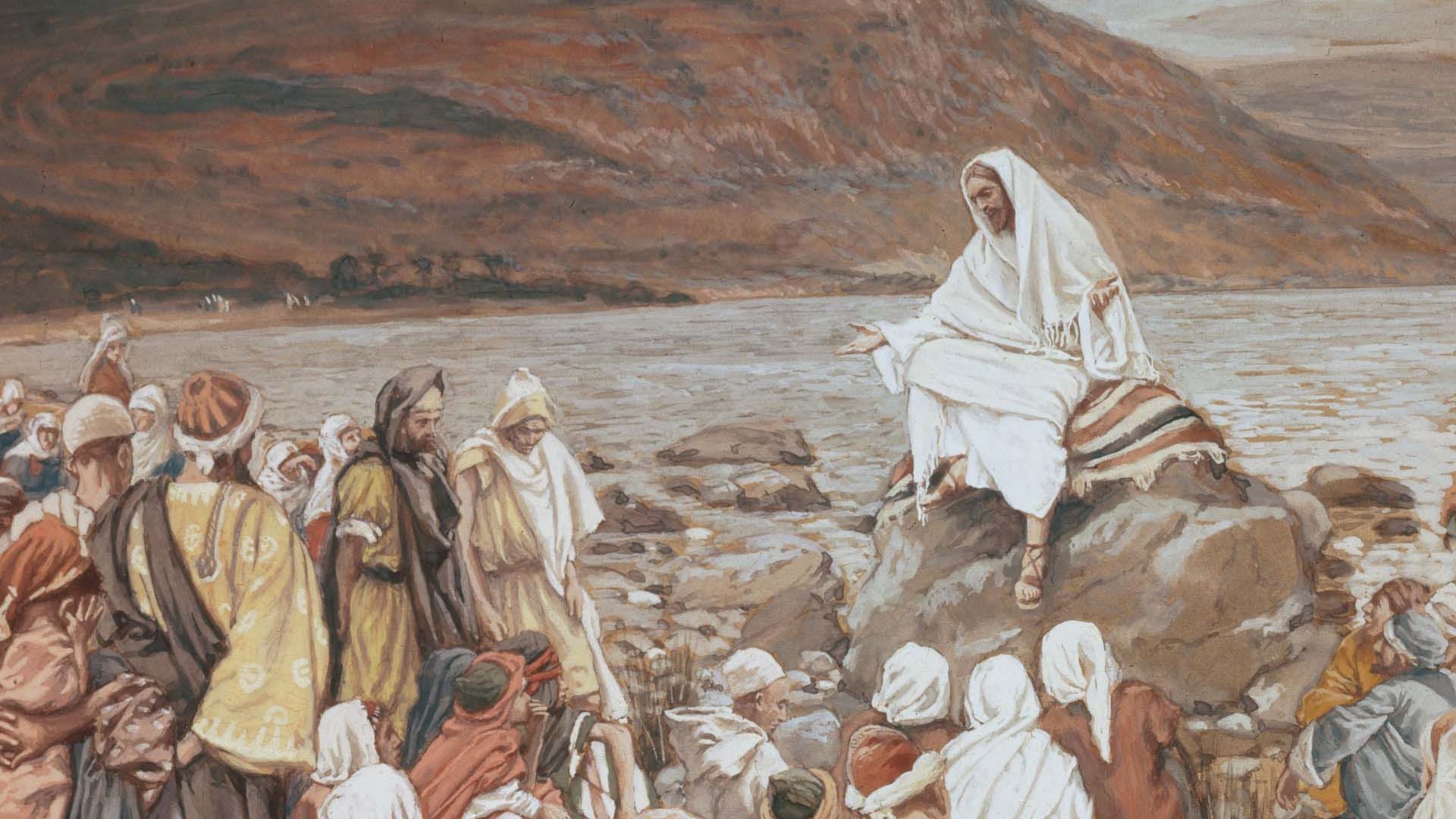
As we continue our study of the Sermon on the Mount, having already looked at its background and authenticity, we now turn our attention to its powerful relevance. The Sermon on the Mount carries deep implications for how we live because it is a remarkably unified and coherent whole. When we examine it thoughtfully, we see how its various parts fit together beautifully.
To help us understand this structure, I will use a seven-part outline originally presented by John Stott. His insights, drawn from his work on the Sermon on the Mount, provide a helpful framework.
The first of these seven sections is found in Matthew 5:3–12. Following the introduction in verses 1 and 2, we step into the body of the sermon. This first section contains the Beatitudes, which focus on the character of the Christian. Jesus begins not with behavior, but with the inner qualities that define someone who belongs to the Kingdom of God. This emphasis on character is the starting point for everything else that follows.
The next part, in verses 13–16, shifts from character to influence. Here Jesus uses the metaphors of salt and light to describe the impact that godly character has on the world. "You are the salt of the earth" and "You are the light of the world" are not suggestions but declarations. If your life is shaped by the character Jesus just described, it will naturally influence others. Character and influence go hand in hand. This is an inside-out kind of life. For those who suggest that character is unrelated to leadership ability, I would argue that integrity—consistency between word and deed—is the first thing people look for in a leader. Is this person trustworthy? Can I rely on them?
The Sermon on the Mount invites us to see our faith from the inside out, not simply as external behavior change. It calls for inward transformation. People often fall into one of two extremes with this sermon. Some believe its standards are so high that they are totally unlivable. Others believe anyone can follow them without much trouble. We must avoid both of these extremes.
After character and influence, Jesus moves into a third area in Matthew 5:17–48—our relationship to the moral law of God. This section unpacks the concept of righteousness. What does true righteousness look like in the Christian life? Again, Jesus keeps the focus on an inside-out transformation. He uses six vivid illustrations to show that real righteousness involves the heart, not just the hands or even the head. These examples are drawn from everyday life—murder, adultery, divorce, swearing oaths, revenge, and love. Jesus exposes how each of these is not just about outward actions but about inner motivations.
This sermon, along with the broader teaching of Scripture, shows us that there should be unity between our heart, our head, and our hands—or to say it another way, between our being, our knowing, and our doing. These three aspects of our life should always work together. The heart represents our being—who we truly are at the deepest level. That’s why we are commanded to love God with all our heart. This command is expanded in Mark 12:30: "Love the Lord your God with all your heart, soul, mind, and strength."
This shows that the mind is also essential. Right thinking brings about a change in perspective, and there can be no lasting transformation in our lives without a change in how we see the world. Romans 12:2 urges us to renew our minds so that we are not conformed to the world but transformed by God's truth. This renewal doesn’t happen automatically. It requires the daily washing of the Word—keeping God's truth fresh in our hearts and minds so that the influence of the world does not overwhelm us.
The final part of the command—loving God with all your strength—relates to our actions. Our hands represent what we do. And our actions are not random; they are energized by what is within. According to Paul’s theology, we have two main sources of energy for our actions: the flesh or the Spirit. These are like two operating systems. Even as believers, we can still fall back into the patterns of the flesh if we choose to. Paul reminds us in Romans 6:13 to present the members of our bodies as instruments of righteousness, as those who are alive from the dead.
This is the key truth: in Christ, you now have an option you didn’t have before. Before knowing Him, you were bound to live according to the flesh. You had no real choice. You could not please God because you lacked His Spirit. But now, by the Spirit’s power, you can walk in a new way. Every moral decision becomes an opportunity to choose the Spirit over the flesh.
Jesus' illustrations in the Sermon on the Mount—on retaliation, love, lust, and honesty—all present us with moral turning points. In each situation, we can either follow the path of the flesh or yield to the Spirit. The body itself is neutral. What matters is what animates it—whether our actions come from a heart surrendered to God or not.
This sermon—and indeed all of Scripture—calls us to a comprehensive kind of faith. Christianity is not a Sunday-only religion. It is meant to involve every part of life, every hour of the day. It should never be just one compartment among many. Faith should be the center from which everything else flows.
Our relationship with God should shape how we act not just at church, but in our workplaces and our homes—arguably the two most difficult places to live out our faith. And yet, these are the places where we spend most of our time. We must resist the temptation to disconnect our spiritual lives from the ordinary routines and relationships of daily life. Christ calls us to bring our faith into the everyday—into our conversations, our decisions, our conflicts, and our responsibilities.
Following Jesus is not about escaping the real world. It’s about living differently in the real world. The Sermon on the Mount helps us see that this different kind of life—centered on Christ, shaped by the Spirit, and grounded in Scripture—is not only possible but essential. And it begins with a heart fully surrendered to Him.
Living with Authentic Devotion and Ambition
We now enter chapter six of the Sermon on the Mount, which introduces two vital dimensions of the Christian life: devotion and ambition. These verses help us understand what it means to live with integrity before God—not just outwardly, but inwardly. After Jesus teaches about character, influence, and righteousness, He turns to the inner life of devotion and the driving force of our ambitions.
Verses 1–18 focus on the reality of our devotional life. Jesus addresses practices such as giving, praying, and fasting. These are all good and necessary disciplines, but they must be shaped by sincerity. Jesus is not interested in religious performance; He cares about the heart. True piety is not about impressing others but about seeking God's presence. Our spiritual life must be real, not merely a performance for an audience.
We’ve all seen how prayer can sometimes lose its depth. In public settings, people often speak to those around them more than to God. I’m reminded of a story about Bill Moyers, a former presidential advisor. During a formal event, he was asked to pray. President Johnson said, “Speak up! I can’t hear you.” Moyers replied, “Sir, I wasn’t speaking to you.” That gentle but bold response reminds us that prayer is a conversation with God, not a show for others.
Many of us know how easy it is for our prayers to become rote. If you’ve ever recited the Lord’s Prayer out of habit, you understand this. The words can become routine, stripped of meaning. I remember as a child, praying in school. I would fold my hands and let my mind wander, paying little attention to the prayer itself. It was just another task—ritual without reality. Jesus warns against that kind of empty repetition. He wants us to engage our hearts and minds fully.
It takes effort to remain attentive in prayer, especially when it's something we do regularly. We must guard against slipping into routine and instead focus on God. This requires practice and intention. Even in public prayer, our focus should be on God, not the people listening. Public prayer should not change our voice or tone to sound impressive. God is not moved by theatrics—He looks at the heart.
True devotion is not about the form but the focus. Jesus wants us to pray, give, and fast with sincerity. These practices should draw us closer to God, not serve as opportunities for recognition. Real spirituality is marked by authenticity.
The next section of chapter six, verses 19–34, addresses our ambition. Jesus challenges us to examine what drives us. What motivates your actions? What do you truly desire? These questions go to the heart of ambition. Our spiritual life should shape our view of wealth, possessions, and priorities.
Jesus teaches us to “seek first the Kingdom of God and His righteousness.” If we get the center right—if Christ is the hub of our life—then the rest will fall into place. The peripheral things will find their proper order. But when Christ is not the center, life becomes fragmented and disordered.
Think of a wheel. If Christ is at the hub, then every spoke—every area of your life—finds alignment. But if something else becomes the hub, the wheel wobbles and collapses. A centered life is a unified life. Our ambition, then, should be simple: to be pleasing to God.
Paul articulates this beautifully in 2 Corinthians 5:9: “So we make it our goal to please Him, whether we are at home in the body or away from it.” This reduces life to a single purpose—pleasing God. That is our true ambition.
I used to think in terms of a priority list: God first, family second, work third, and so on. There’s value in that, but I’ve come to see that it’s better to think of God not as first on a list, but as the center of everything. He’s not one item among many—He is the source of all. Just as we should never place Jesus in a lineup with other religious figures—He is in a category of His own—so too should we never treat God as just a priority among others.
When we live from the Center, whatever we are doing becomes our highest priority in that moment. Whether it’s writing a contract, making a decision, or spending time with family—that task becomes the most important thing because we are doing it in and through Christ. Every act becomes an act of worship.
When you are with your children, that becomes your highest priority—not because it’s number two on your list, but because you are fully present, living from the Center. This is how we honor God with our whole lives. As Jim Elliot once wrote, “Wherever you are, be all there. Live to the hilt every situation you believe to be the will of God.” That kind of focus transforms how we live.
Too often, we miss the fullness of the moment by thinking about what’s next. We sacrifice the present on the altar of the future. But the present is all we truly have. This moment is where we meet God. Living with a single heart means embracing each moment as a gift.
The philosopher Søren Kierkegaard once said, “Purity of heart is to will one thing.” That captures the essence of ambition rightly directed. When our ambition is to please God above all else, our hearts are unified. We are no longer pulled in a thousand directions. We become people of clarity, focus, and purpose.
Jesus understands our desire for purpose, for gain, for ambition. He created us with those longings. But He also warns us to pursue what will last. We must be careful not to chase things that ultimately disappoint. “Make sure,” He says, “that your definition of profit truly is profit.” If we don’t, we risk wasting our lives on trivial pursuits.
But if we seek His Kingdom first, all other things will find their rightful place. That is the life of centered ambition—a life marked by devotion, focus, and enduring purpose.
Living with Relational Grace and a Solid Commitment
As we enter the final chapter of the Sermon on the Mount, we encounter two more themes that bring the message full circle. Chapter six explored our inner life—our devotion and ambition. Chapter seven moves us outward again, examining how our transformed hearts shape our relationships and our commitment to live by Christ’s teachings.
The first section, Matthew 7:1–20, focuses on relationships. This includes how we engage with both believers and unbelievers, and how we evaluate others. Jesus warns against a judgmental spirit, urging us to check our own hearts before we assess others. He asks us to consider whether we look at people with grace or with condemnation. This passage reminds us that we are all flawed and need humility in how we relate to others.
Jesus calls us to live with integrity in our relationships, refusing to harbor secret agendas or manipulate others. The goal is to be people of trust—safe people. Simplicity, in this context, means living without duplicity. It means that what we say is what we mean, and that our yes means yes and our no means no. We’ve all encountered relationships that feel unsafe, where people seem to manipulate or deceive. In contrast, a Christ-centered life reflects honesty, consistency, and clarity.
Jesus’ final teaching, in Matthew 7:21–27, addresses our commitment. This is the famous passage about the two foundations. Jesus tells us that it’s not enough to hear His words; we must also put them into practice. The person who does so is like a wise builder who lays their foundation on rock. When the storms come, the house stands firm.
This part of the sermon challenges us to examine whether our lives align with what we claim to believe. Do our actions reflect our faith? The book of James echoes this message, teaching that real faith always expresses itself in how we live. Our behavior reveals our beliefs.
A life of faith should be comprehensive, clear, consistent, and coherent. These are the same criteria we use to evaluate worldviews—clarity, coherence, comprehensiveness, and consistency—and they also apply to how we live. A coherent life is one lived from the Center, anchored in Christ. A consistent life means our actions reflect our values. A comprehensive life includes every area, even the ordinary. And a life of clarity reflects focus and purpose, willing one thing.
Integrity means that our beliefs and behaviors match. There is no split between our convictions and our actions. We don’t manipulate, deceive, or live with hidden agendas. Instead, we strive for transparency and faithfulness.
Only the one who obeys Christ’s teachings is truly wise. We are all building our lives on some foundation. Whether we recognize it or not, we are always constructing something with our time, choices, and relationships. Jesus tells us to build on His words because that is the only foundation that will endure.
Paul uses a similar image in 1 Corinthians 3:10–15, where he speaks about the judgment seat of Christ. He says we are building on the foundation of Christ, but the materials we use vary. Some build with gold, silver, and precious stones—works done by the Spirit. Others build with wood, hay, and straw—works done in the flesh. On the day of judgment, fire will test each person’s work. Only what is done through Christ will last.
This means that what we invest in others—acts of love, service, and sacrifice—will endure forever. The only things we truly keep are the things we give away in love.
Even simple stories like “The Three Little Pigs” illustrate this truth. The pig who built with bricks was the only one whose house endured. It’s a basic, memorable metaphor, but it holds spiritual wisdom. Only a life built on Christ can stand against the storms of life and the attacks of the enemy.
Jesus finishes His sermon, and the people are astonished. Matthew 7:28–29 tells us they were amazed at His teaching because He taught with authority—not like the scribes, who relied on the teachings of others. Jesus didn’t say, “You’ve heard it said.” Instead, He said, “I tell you.” His authority was personal, divine, and absolute.
This is why you cannot separate the Sermon on the Mount from Jesus Himself. Gandhi once said he admired the Sermon on the Mount and tried to live by it, even suggesting it would still be true for him if Jesus had never existed. But that misses the point entirely. The sermon is deeply personal and rooted in Jesus’ own authority. Everything He says is grounded in His identity. We follow the sermon because we follow the One who gave it.
The Sermon on the Mount is broad and profound. It touches every part of life—our inner thoughts, outward actions, personal relationships, and foundational commitments. It is not just a message to admire; it is a life to be lived. Christ calls us to build wisely, live authentically, and love sacrificially, all while keeping Him at the center of everything.
Questions for Reflection
How does the Sermon on the Mount challenge your understanding of what it means to live a faithful and obedient life?
In what ways can you align your inner character more closely with the Beatitudes described by Jesus?
How can you cultivate greater sincerity and focus in your devotional practices, such as prayer, giving, or fasting?
What foundation are you building your life on, and how can you ensure it is grounded in Christ’s words and not in temporary pursuits?