

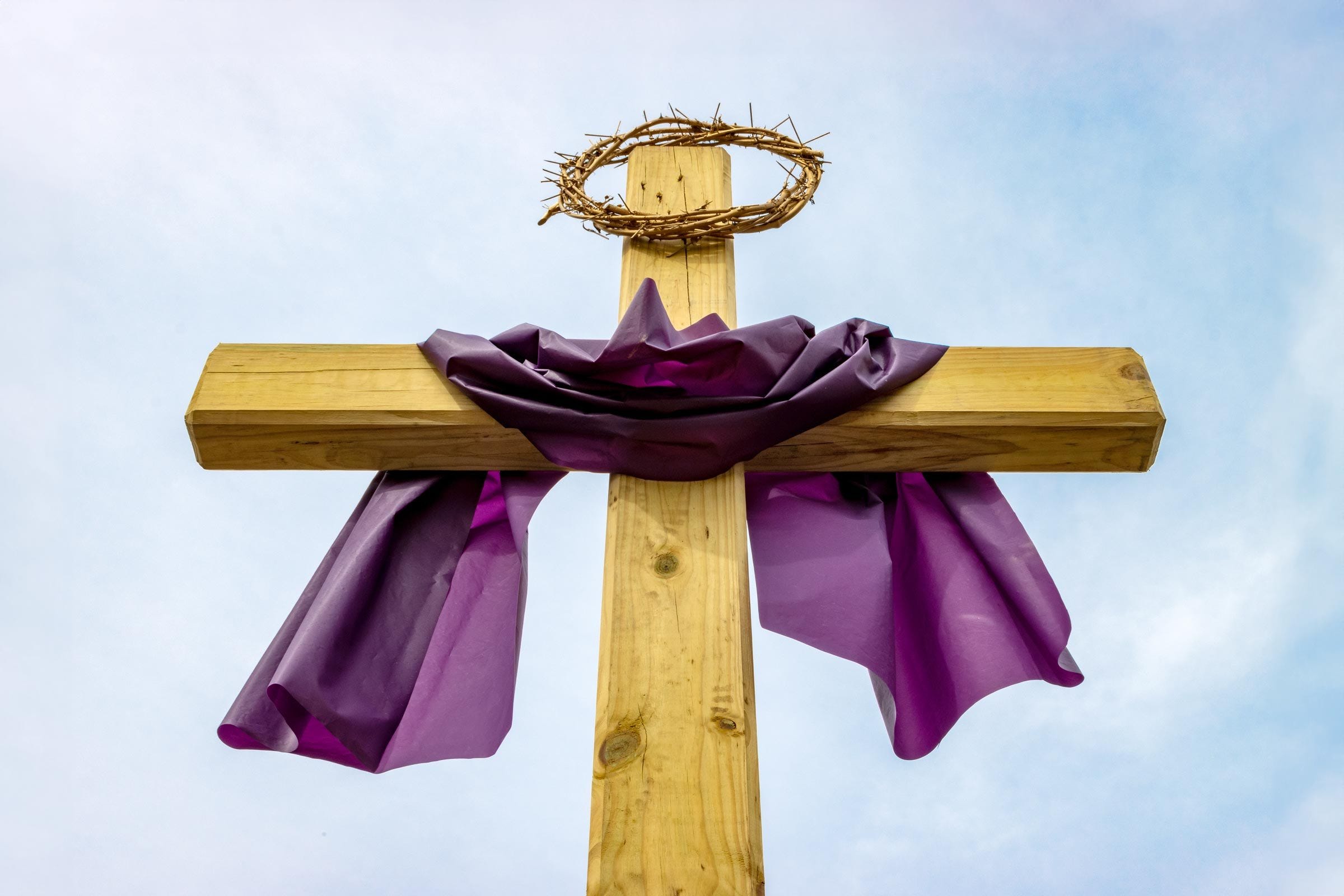
Lent began on Ash Wednesday, February 18, 2026, and concludes on Holy Saturday, April 4, 2026, leading to the celebration of Easter on April 5, 2026. Throughout these forty days, we will provide daily devotionals—including Scripture, meditation, and prayer—to help you walk more intentionally with Christ. May this sacred season deepen your hunger for God and your desire to be conformed to the image of His Son. These devotionals came from one of our many resources, Once a day, 40 Days to Easter. You can find this book on our website at www.kenboa.org. In the 40 days of Lent, Sundays are not included so there will no devotionals on these days.
Day 29 (March 23)
Matthew 11:19
“The Son of Man came eating and drinking, and they say, ‘Here is a glutton and a drunkard, a friend of tax collectors and sinners.’”
Luke 7:36-39
When one of the Pharisees invited Jesus to have dinner with him, he went to the Pharisee’s house and reclined at the table. A woman in that town who lived a sinful life learned that Jesus was eating at the Pharisee’s house, so she came there with an alabaster jar of perfume. As she stood behind him at his feet weeping, she began to wet his feet with her tears. Then she wiped them with her hair, kissed them and poured perfume on them.
When the Pharisee who had invited him saw this, he said to himself, “If this man were a prophet, he would know who is touching him and what kind of woman she is -- that she is a sinner.”
Luke 5:29-32
Then Levi held a great banquet for Jesus at his house, and a large crowd of tax collectors and others were eating with them. But the Pharisees and the teachers of the law who belonged to their sect complained to his disciples, “Why do you eat and drink with tax collectors and sinners?”
Jesus answered them, “It is not the healthy who need a doctor, but the sick. I have not come to call the righteous, but sinners to repentance.”
Luke 15:1-2
Now the tax collectors and sinners were all gathering around to hear Jesus. But the Pharisees and the teachers of the law muttered, “This man welcomes sinners and eats with them.”
Luke 19:1-7
Jesus entered Jericho and was passing through. A man was there by the name of Zacchaeus; he was a chief tax collector and was wealthy. He wanted to see who Jesus was, but because he was short he could not see over the crowd. So he ran ahead and climbed a sycamore-fig tree to see him, since Jesus was coming that way. When Jesus reached the spot, he looked up and said to him, “Zacchaeus, come down immediately. I must stay at your house today.” So he came down at once and welcomed him gladly. All the people saw this and began to mutter, “He has gone to be the guest of a sinner.”
Meditation
Sin is dirty, and it separates us from God. The religious leaders of Jesus’ time got at least this much right. But they had worked it all out in their own favor, exempting themselves from consequences. And in so doing, they had built their own system, a system of insiders and outsiders, divided by arbitrary laws that God had not written and enforced by real guards. The outcasts - the sick, the ceremonially unclean, the sinful, the drunkards, the prostitutes, the Samaritan half-breeds and the tax collectors (those who lined their own pockets for the sake of the Romans and at the expense of their fellow Jews) - these people had little in common save one thing: none of them were allowed entrance to the temple. They were not allowed to approach God. Yet it is these people Jesus finds himself with, even seems to seek out. He dines with sinners and tax collectors, lets prostitutes wash his feet, refuses to stone an adulteress to death, even touches lepers and a bleeding woman! For a Jew who had strictly obeyed the law, these behaviors were completely incongruous. Unless Jesus is saying something, making a statement about what God thinks of men in authority who hide their own sins behind robes and titles while exposing the sins of others and prohibiting them from worship. Jesus did not judge the sinners or the unclean. He loved and respected them. More than that, he offered them acceptance and claimed he, himself (not the traditions that stood against them) was the only way to God. And because he spoke with authority and walked in integrity (because he hid no sins under his robes), many of them believed him.
Prayer
Holy Lord, you dwell on a high and holy place. Holiness informs all that you say and do, and holiness is what eludes me most. I am a sinner by nature, and I have sinned in my thoughts, feelings and actions. I live in a sinful world among sinful people. And yet you have sent your Son to redeem us. He was known as a friend of sinners. People who were nothing like him liked him and were drawn to him. You chose to sanctify me in him, to set me apart from my sin. You accepted me as I am, and you love me so much that you promise me that I do not have to remain as I am. Rather, through the power of your Holy Spirit, you have begun changing me in ways I could never change myself. All glory and honor are due your name. Amen.
Day 30 (March 24)
Luke 14:8-11
“When someone invites you to a wedding feast, do not take the place of honor, for a person more distinguished than you may have been invited. If so, the host who invited both of you will come and say to you, ‘Give this person your seat.’ Then, humiliated, you will have to take the least important place. But when you are invited, take the lowest place, so that when your host comes, he will say to you, ‘Friend, move up to a better place.’ Then you will be honored in the presence of all the other guests. For all those who exalt themselves will be humbled, and those who humble themselves will be exalted.”
Mark 10:42-45
Jesus called them together and said, “You know that those who are regarded as rulers of the Gentiles lord it over them, and their high officials exercise authority over them. Not so with you. Instead, whoever wants to become great among you must be your servant, and whoever wants to be first must be slave of all. For even the Son of Man did not come to be served, but to serve, and to give his life as a ransom for many.”
John 5:30
By myself I can do nothing; I judge only as I hear, and my judgment is just, for I seek not to please myself but him who sent me.
Philippians 2:5-11
In your relationships with one another, have the same mindset as Christ Jesus:
Who, being in very nature God, did not consider equality with God something to be used to his own advantage; rather, he made himself nothing by taking the very nature of a servant, being made in human likeness. And being found in appearance as a man, he humbled himself by becoming obedient to death -- even death on a cross! Therefore God exalted him to the highest place and gave him the name that is above every name, that at the name of Jesus every knee should bow, in heaven and on earth and under the earth, and every tongue confess that Jesus Christ is Lord, to the glory of God the Father.
Meditation
Jesus was criticized, rejected, slandered, misunderstood, plotted against, betrayed, denied, and abused by his family, friends and disciples, Jewish religious leaders and the Romans. He chose identification with sinners and lived in poverty and obscurity for most of his 33 years. As his ministry progressed, Jesus faced increasing levels of hostility and opposition. Yet, in spite of all this, he knew who and whose he was, and his relationship with the Father gave him the power and security to love and serve others. He could not have done this if he had allowed himself to be defined and bound by the opinions of those around Him. But he did not. The humility of Jesus Christ was an extraordinary reflection of an absolute dependence on and submission to God. We see this in his baptism. As Jesus submits to the baptism of John, a dove descends. Doves were the sacrifice poor people offered. Jesus identifies with the poor, the lowly, the outcast. For us, humility is the mark of true repentance, evidence of a transformed life. Our flesh and our pride chafe against humility, so we are forced to learn it through suffering, forgiving those who wrong us and seeing these incidents as opportunities to grow. As we do, we begin to see in ourselves a teachable spirit, a willingness to seek wise counsel and submission to authority. As we join John the Baptist in saying, “He must decrease, and I must increase,” we learn the wisdom of humility and stand in awe of our Lord’s amazing condescension.
Prayer
God of heaven and earth, you dwell on a high and holy place, and also with the contrite and lowly of spirit. I ask for the grace of true contrition so that I would humble myself under you almighty hand and put no confidence in the flesh. Keep me from the self-deception and rationalization that would make me think more highly of myself than I ought. I acknowledge that you know all my thoughts and motives even more fully than I can know them. Even my best deeds can be tainted with the selfish desire for recognition and applause. But as I learn to make you my audience instead of playing to an audience of many, there is no place for pretense or hiding or posturing. All things are open and laid bare before you eyes, and only your assessment will matter in the end. Amen.
Day 31 (March 25)
Mark 4:35-5:8, 16-19
That day when evening came, [Jesus] said to his disciples, “Let us go over to the other side.” Leaving the crowd behind, they took him along, just as he was, in the boat. There were also other boats with him. A furious squall came up, and the waves broke over the boat, so that it was nearly swamped. Jesus was in the stern, sleeping on a cushion. The disciples woke him up and said to him, “Teacher, don’t you care if we drown?”
He got up, rebuked the wind and said to the waves, “Quiet! Be still!” then the wind died down and it was completely calm.
He said to his disciples, “Why are you so afraid? Do you still have no faith?”
They were terrified and asked each other, “Who is this? Even the wind and the waves obey him!”
They went across the lake to the region of the Gerasenes. When Jesus got out of the boat, a man with an impure spirit came from the tombs to meet him. This man lived in the tombs, and no one could bind him anymore, not even with a chain. For he had often been chained hand and foot, but he tore the chains apart and broke the irons on his feet. No one was strong enough to subdue him. Night and day among the tombs and in the hills he would cry out and cut himself with stones.
When he saw Jesus from a distance, he ran and fell on his knees in front of him. He shouted at the top of his voice, “What do you want with me, Jesus, Son of the Most High God? In God’s name don’t torture me!” For Jesus had said to him, “Come out of this man, you impure spirit!”
Those who had seen it told the people what had happened to the demon-possessed man.... Then the people began to plead with Jesus to leave their region.
As Jesus was getting into the boat, the man who had been demon-possessed begged to go with him. Jesus did not let him, but said, “Go home to your own people and tell them how much the Lord has done for you, and how he has had mercy on you.”
Meditation
Something about Jesus drew the disciples to him. But it is clear that, until now, they really had no idea who they had signed on with. A storm big enough to frighten weathered fishermen was nothing to him. “Be still!” he says as someone who has spoken to the waves before, and it was. But notice their response. “Who is this?” they ask, because they have never seen, probably never heard of, anyone with such authority. A demon-possessed man who had been terrorizing a city falls to his knees, and Jesus is unmoved. “Come out!” Jesus says. The demon does, and the people are afraid and beg Jesus to leave. There is something about that kind of power that is simultaneously attractive and repellent. Like the disciples, we also sometimes fail to realize who we have signed up to follow. Like the Gerasenes, we sometimes hold Jesus off, afraid of what else he might do. We call Jesus “Savior,” but we often forget the staggering ramifications of the fact that he is also “Lord.” In a few verses, Mark demonstrates Jesus’ lordship over natural forces (a raging sea), over the spirit world (the demon-possessed man), and if you were to keep reading, you would see him conquer disease and death as well. If Jesus’ disciples had any question about the authority of this God-man they were following, they would soon be reassured. These were not tricks. Jesus possessed all authority in heaven and on earth. And maybe the most remarkable thing about his authority is that he chose to use it to suffer and die in our place, instead of exercising that authority and saving himself.
Prayer
Lord Jesus, you are exalted above all things I can conceive or even imagine. You created everything and have authority over everything. Time and space, disease, disaster and even death are all part of your created order -- you brought them into being and you rule over them. You are the beginning and the end, the Alpha and the Omega, the First and the Last. Your matchless power known no bounds except those which are self-imposed. And it is amazing that you, in your humility, chose to restrain your powers and die for powerless people like me. I confess that I love to call you Savior, but it is often difficult for me to surrender to you as Lord. Forgive my arrogance, and help me to place the whole of my life under your sovereign rule. In your mighty name I pray. Amen.
Day 32 (March 26)
Luke 4:1-13
Jesus, full of the Holy Spirit, left the Jordan and was led by the Spirit into the wilderness, where for forty days he was tempted by the devil. He ate nothing during those days, and at the end of them he was hungry.
The devil said to him, “If you are the Son of God, tell this stone to become bread.”
Jesus answered, “It is written: ‘Man shall not live on bread alone.’”
The devil led him up to a high place and showed him in an instant all the kingdoms of the world. And he said to him, “I will give you all their authority and splendor; it has been given to me, and I can give it to anyone I want to. If you worship me, it will all be yours.”
Jesus answered, “It is written: ‘Worship the Lord your God and serve him only.’”
The devil led him to Jerusalem and had him stand on the highest point of the temple. “If you are the Son of God,” he said, “throw yourself down from here. For it is written: ‘He will command his angels concerning you to guard you carefully; they will lift you up in their hands, so that you will not strike your foot against a stone.’”
Jesus answered, “It is said: ‘Do not put the Lord your God to the test.’”
When the devil had finished all this tempting, he left him until an opportune time.
Hebrews 4:14-16
Therefore, since we have a great high priest who has ascended into heaven, Jesus the Son of God, let us hold firmly to the faith we profess. For we do not have a high priest who is unable to empathize with our weaknesses, but we have one who has been tempted in every way, just as we are -- yet he did not sin. Let us then approach God’s throne of grace with confidence, so that we may receive mercy and find grace to help us in our time of need.
Meditation
Every great leader will, at some point in time, be tested. This was certainly true for Jesus. Immediately after his baptism and the announcement of his public ministry, Jesus found himself in the wilderness, alone and vulnerable. Armed with nothing other than the Scripture he had buried in his heart, Jesus faced the enemy. If the severity of our temptations is dependent upon the threat we pose against the forces of darkness, we can assume that Christ’s temptation was more than just a battle of words. In fact, this was an assault. For 40 days the devil twisted God’s words, offering things that were not his to give. And for 40 days Jesus resisted, repelling his attacks, forcing the devil to leave him “until an opportune time.” Throughout the gospels we read of Jesus facing demons, but these seem less temptation and more nuisance. Still, an opportune time did come. Late one night in the Garden of Gethsemane, Jesus would find himself alone and vulnerable again. There he would wrestle with his own desire to find another way other than that which his Father had planned since before the beginning of time. “Please take this cup away from me,” he prayed. And yet, by the end of his time there, his prayer changed to, “Not my will, but yours.” He had remained strong in the desert, and now he was able to endure faithfully to the cross. His trial in the wilderness trained him well. He remains strong to this day, empathizing with our weaknesses and strengthening us to say, “Not my will, but yours.”
Prayer
God of all comfort and strength, you offer yourself as the ultimate resource for me when I find myself in times of loneliness and vulnerability. Teach me the wisdom of quickly turning to you in those times, for I know that when I face difficulties I am prone to give in to temptation. I quickly seek to medicate myself with short-term pleasures, self-indulgence and other sinful pain-avoidance strategies. But I know these only exacerbate the problem. Your presence, grace and power lift me up when I stumble. Give me the grace to look to you for my needs and to fully submit myself to your good will for my life. May I rest in you and put my hope in your promises and goodness. Only then will I come to know the peace that surpasses all understanding and guards my heart and mind in Christ Jesus. Amen.
Day 33 (March 27)
John 8:1-11
At dawn [Jesus] appeared again in the temple courts, where all the people gathered around him, and he sat down to teach them. The teachers of the law and the Pharisees brought in a woman caught in adultery. They made her stand before the group and said to Jesus, “Teacher, this woman was caught in the act of adultery. In the Law Moses commanded us to stone such women. Now what do you say?”
They were using this question as a trap, in order to have a basis for accusing him.
But Jesus bent down and started to write on the ground with his finger. When they kept on questioning him, he straightened up and said to them, “Let any one of you who is without sin be the first to throw a stone at her.” Again he stooped down and wrote on the ground.
At this, those who heard began to go away one at a time, the older ones first, until only Jesus was left, with the woman still standing there. Jesus straightened up and asked her, “Woman, where are they? Has no one condemned you?”
“No one, sir,” she said.
“Then neither do I condemn you,” Jesus declared. “Go now and leave your life of sin.”
Matthew 9:13
But go and learn what this means: ‘I desire mercy, not sacrifice.’[a] For I have not come to call the righteous, but sinners.”
John 3:17
For God did not send his Son into the world to condemn the world, but to save the world through him.
1 Corinthians 6:9b-11
Do not be deceived: Neither the sexually immoral nor idolaters nor adulterers nor men who have sex with men nor thieves nor the greedy nor drunkards nor slanderers nor swindlers will inherit the kingdom of God. And that is what some of you were. But you were washed, you were sanctified, you were justified in the name of the Lord Jesus Christ and by the Spirit of our God.
Colossians 1:21-22
Once you were alienated from God and were enemies in your minds because of your evil behavior. But now he has reconciled you by Christ’s physical body through death to present you holy in his sight, without blemish and free from accusation.
Meditation
Jesus had seen our accuser face-to-face. For 40 days, hungry and exhausted, he had withstood the devil’s temptation and calumniation. “If you are the Son of God, then….” Jesus never bought into the lie that he might not be who God said he was. He persisted, because accusation (false or true) is one of the enemy’s favorite tactics. And having faced the evil of accusation himself, Jesus refused to ever accuse anyone, except those who were adding to the devil’s kingdom (cf. Matthew 23:15). Even when faced with this woman who was obviously guilty of breaking the law, Jesus calls to mind a higher law, one revealed through the prophet Hosea, one he had already advised these men to contemplate: “I desire mercy, not sacrifice.” Sacrifices were religious offerings to God and were often bloody and required violence. Mercy, on the other hand, was represented by gentleness and kindness and was a sign of the heart, not merely an act of religion. So Jesus bent down in the dirt long enough to distract the gaze of these men from the woman, long enough for her to regain her composure, wrap herself in something. And then Jesus said something that caused her accusers to walk away, one by one, just as the accuser had left him in the wilderness, thwarted. Jesus had not come to condemn the immoral; he had come to rescue them. He had come to gather those who were far off and filthy and wash them clean, to show them mercy and present them to the Father, free from all accusation.
Prayer
Heavenly Father, you are the rescuer and deliverer of my soul. Through your Son, you stooped down in order to lift me up. I was dead in my sins and trespasses. I was held captive in the snare of the devil to do his will, but Jesus came to overthrow this bondage and to liberate me, to call me his beloved. You have now granted me the glorious gift of acceptance and welcome in Christ. Through the powerful work of the Savior, I am rescued from the domain of darkness and transferred into your kingdom, without fault, without blemish. And you will not hear an accusation against me again. Just as you have accepted and forgiven me, may I also accept and forgive those who have sinned against me. Rather than despising those who have done wrong, may I reach out to them with your healing love and mercy. In Christ’s name I pray. Amen.
Day 34 (March 28)
John 1:1, 14
In the beginning was the Word, and the Word was with God, and the Word was God. The Word became flesh and made his dwelling among us. We have seen his glory, the glory of the One and only Son, who came from the Father, full of grace and truth.
Isaiah 53:2-3
He grew up before him like a tender shoot, and like a root out of dry ground. He had no beauty or majesty to attract us to him, nothing in his appearance that we should desire him. He was despised and rejected by mankind, a man of suffering, and familiar with pain. Like one from whom people hide their faces he was despised, and we held him in low esteem.
John 17:1, 4-5
After Jesus said this, he looked toward heaven and prayed: “Father, the hour has come. Glorify your Son, that your Son may glorify you.... I have brought you glory on earth by finishing the work you gave me to do. And now, Father, glorify me in your presence with the glory I had with you before the world began.”
Hebrews 12:1-2
Therefore, since we are surrounded by such a great cloud of witnesses, let us throw off everything that hinders and the sin that so easily entangles. And let us run with perseverance the race marked out for us, fixing our eyes on Jesus, the pioneer and perfecter of our faith. For the joy set before him he endured the cross, scorning its shame, and sat down at the right hand of the throne of God.
2 Peter 1:16
For we did not follow cleverly devised stories when we told you about the coming of our Lord Jesus Christ in power, but we were eyewitnesses of his majesty.
1 Corinthians 1:27-28
But God chose the foolish things of the world to shame the wise; God chose the weak things of the world to shame the strong. God chose the lowly things of this world and the despised things -- and the things that are not -- to nullify the things that are.
Meditation
It is nearly Easter, and we will hang crosses on the walls of our homes and churches; we may decorate some with flowers and ribbons. But what is done to our faith when we do? With all of our present-day associations with the cross -- a sign of glory, an object of Christian identification and adoration – it is almost impossible to see it for what it actually was. And when we fail to understand the cross, we fail to properly estimate what our Lord suffered on our behalf: Shame. Jesus despised the cross. To even speak of the cross in his time was disgusting. Gallows, guillotine, electric chair. We would never hang these things on our walls or sing songs about them. But the cross was worse than any of these. It was a punishment reserved for the worst of the worst. It was designed to bring about the utmost torture to those not even worthy to serve as slaves. So to say that Jesus “endured the cross, scorning its shame,” is not to say “poor Jesus.” It is to say that Jesus so loved us and so submitted to the Father that he would not only endure torment, but also ignominy, public humiliation, which carries with it a kind of pain no one can imagine, save those who have endured it themselves. And when it was over, he was exalted to the highest place of dignity and honor in the universe, so that we would one day witness his glory and also share in it.
Prayer
Lord of Glory, by your love and grace you emptied yourself by taking the form of a servant, embracing my shame and suffering an ignominious and tortuous death on a cross. Such amazing love is utterly incomprehensible to me, but you endured the shame of the cross because you could see beyond it to the joy that was set before you. Likewise, teach me to view things from an eternal rather than a temporal perspective, knowing that you promise to lift up all those who humble themselves before you, in due time. Remind me that the path to glory often requires a sojourn through travail. Show me your glory in increasing measure, as I seek to follow you in all my ways. Then I will know, with greater clarity, that serving you is true freedom, that your yoke is light, and that your cross is glorious. In your name I pray. Amen.